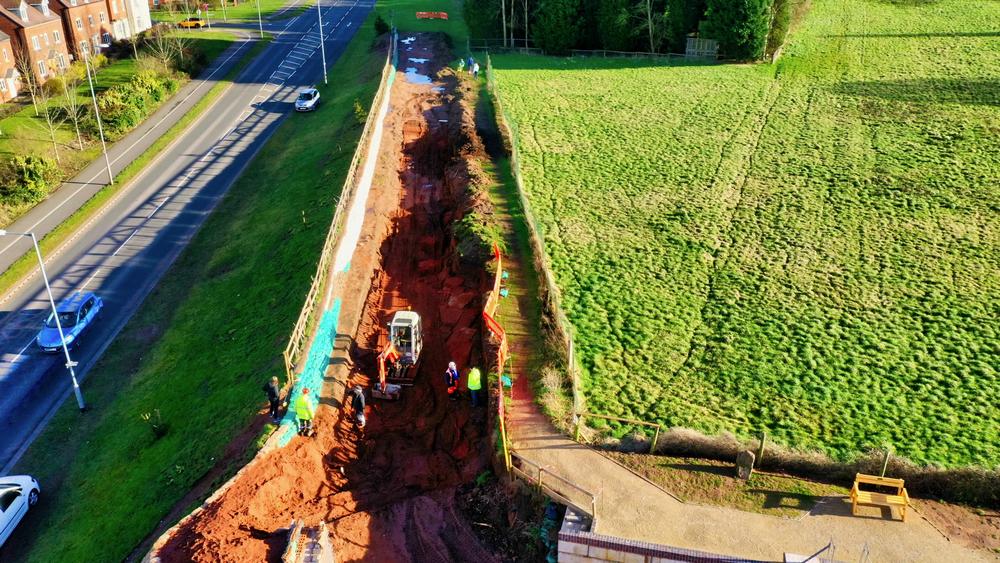
As mentioned in previous blogs, the Fosseway section of our restoration is progressing rapidly. Most of the construction work within the ‘big pound’ adjacent to the disused railway embankment had been completed. A bit of brickwork along the tops of the enclosure wall is all that is left, of any substance, to complete. Permission to start work alongside Falklands Road was eagerly awaited but the months dragged on without it. Eventually we got the all clear to proceed.
This new work area is pretty big. Starting at the exit from the ‘big pound’ the new canal bed has to be dug, against rising land, up to and under Claypit Lane. Beyond Claypit Lane, the land falls away again as we approach the Birmingham Road, where two locks need to be built to take the canal down and under the A5127 island and on to a new tunnel under the Lichfield-Birmingham railway line.
This blog will deal with the first part of this length, that from the ‘big pound’
through to just before Claypit Lane.
Before work could start on the main drag, it
was important to ensure that we had made the exit from the pound big enough
for a 70’ foot narrow boat to get through. And, secondly, we had to be sure that
a sizable water mains pipe which passes beneath the canal, and eventually the
road, was deep enough to be of no problem to ourselves. Locating the pipe
accurately using divining sticks in the hands of Steve Webster we managed to
be sure this pipe held no problems for us.
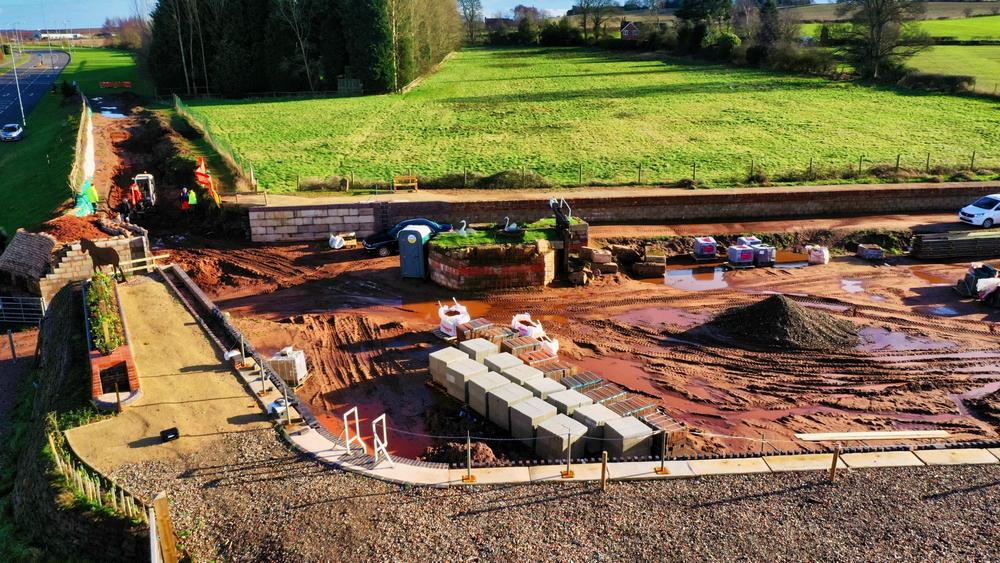
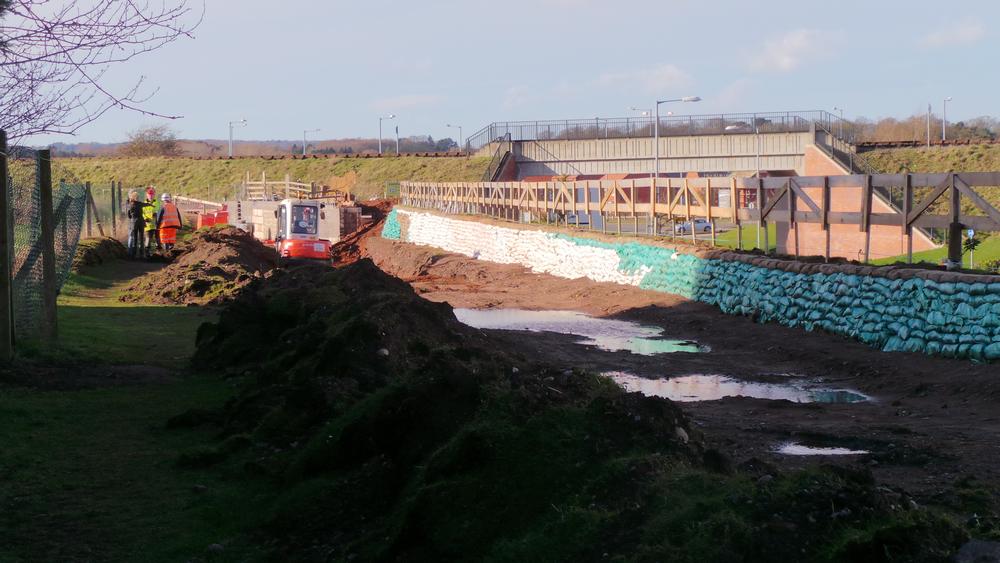
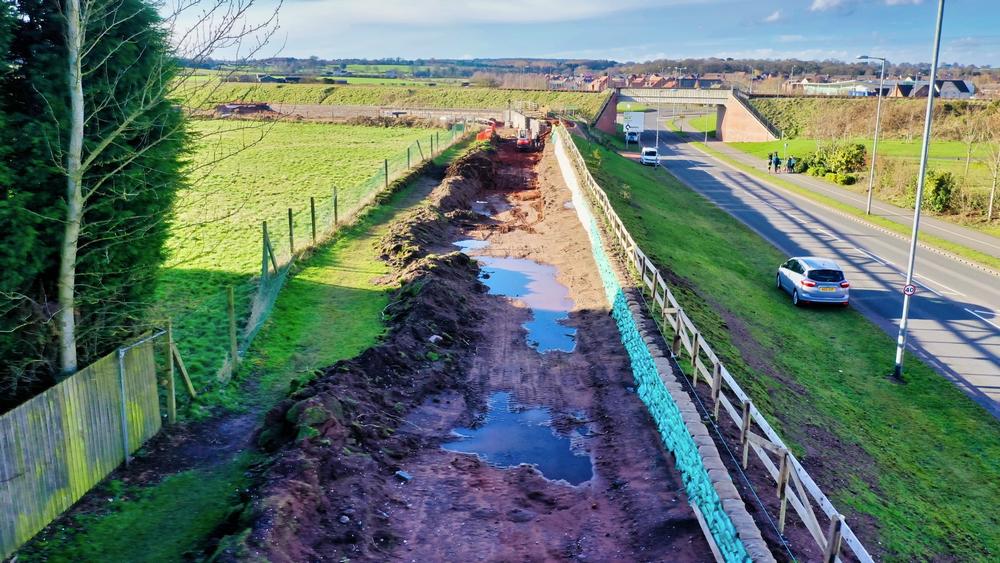
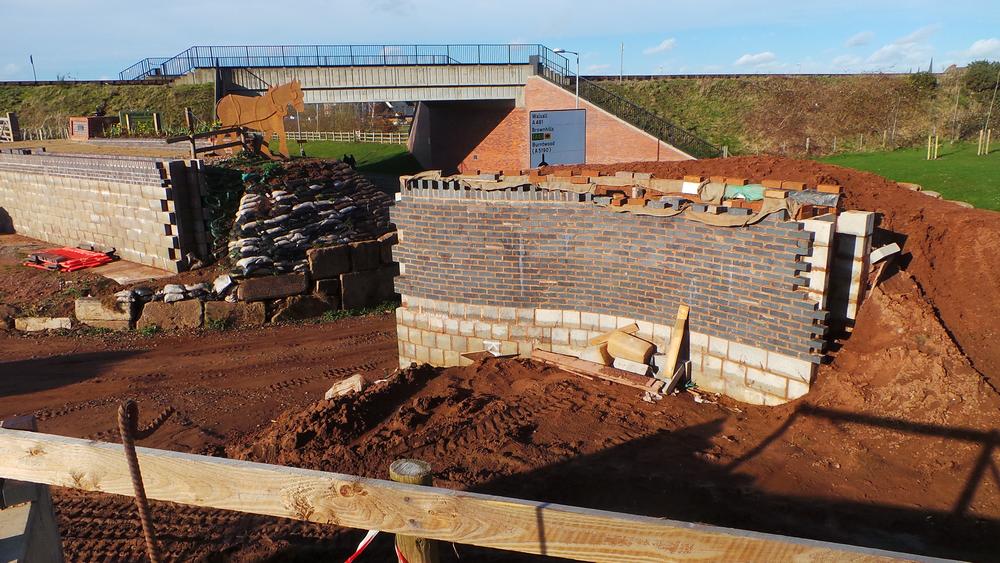
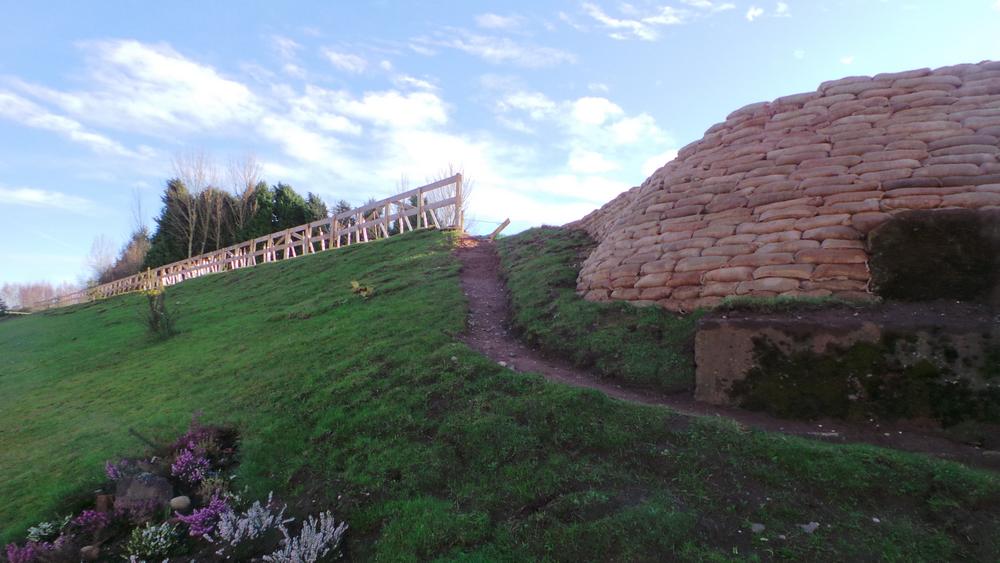
To ensure the longer boats can easily exit the pound, the retaining wall on the road side has had a neat little ‘S’ shape incorporated in its build, giving boat more room to manoeuvre. It was necessary to raise the height of the roadside embankment. to achieve the required depth of the new cut as it emerges from the pound by some 3 feet or so. To do this the turf was removed from the top of the bank and a plastic sandbag wall was built up along the top, where the new left-hand towpath will be constructed. This sandbag wall is used to retain the sand/soil piled against it on the road side, and on the canal side it will eventually be buried underneath the towpath itself.
As the roadside earth bank gains in height the height of the sandbag wall decreases and it finally reduces to zero as it nears the coppice on the righthand side. The naked earth scar where we had removed the turf off the bank and the newly built bank then had to be re-turfed using the original turves in the process.
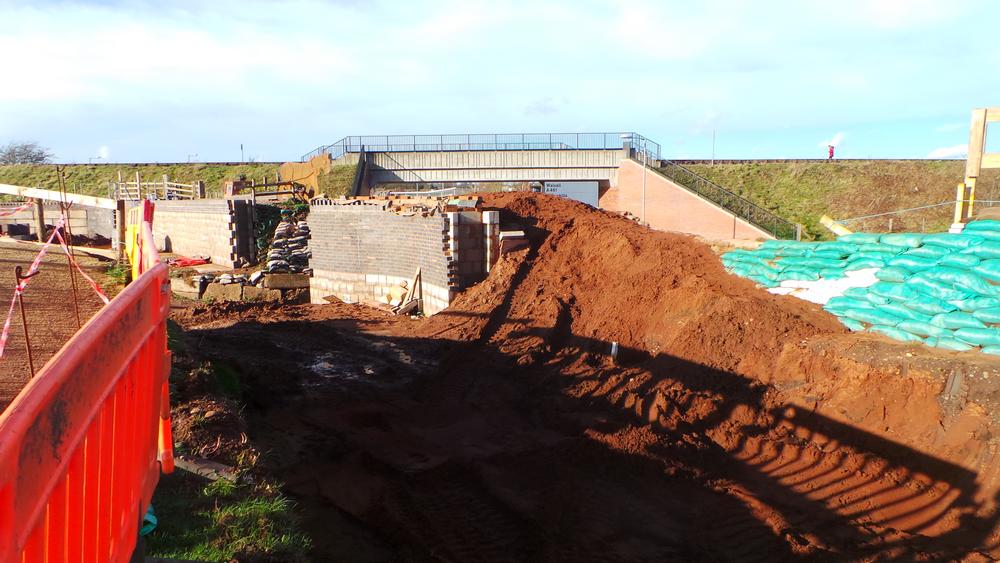
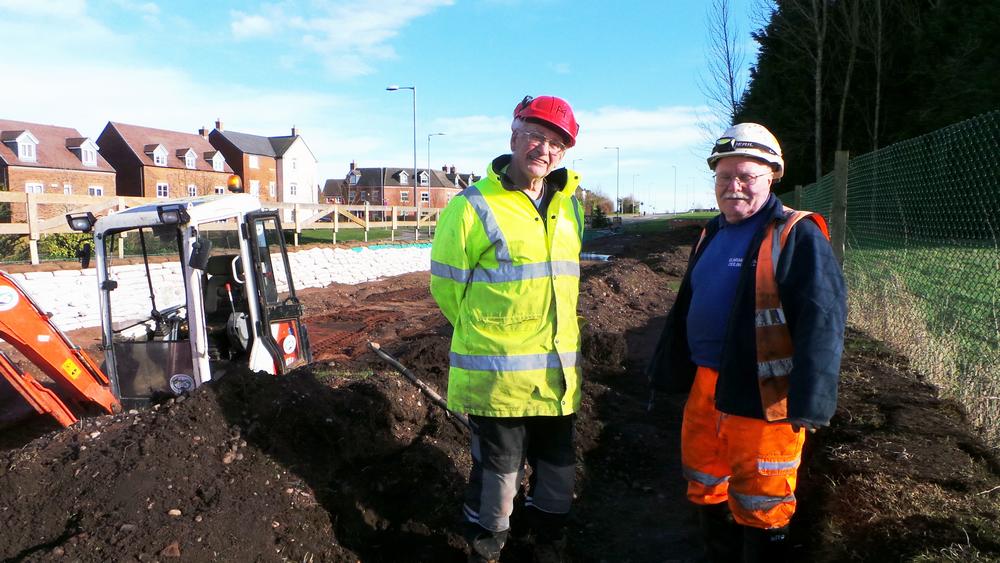
Turning our attention to the field-side of our workings, some of the turves have been used to raise the towpath base, which at this point is well above the height of the field. Care had to be taken here to not impede the many walkers we now have along this area whilst we work in this area. Meanwhile our excavators and dumper trucks have been busy removing soil and buried rubbish such as bits of old timber and metal from the base of the canal and recycling it elsewhere within the site.
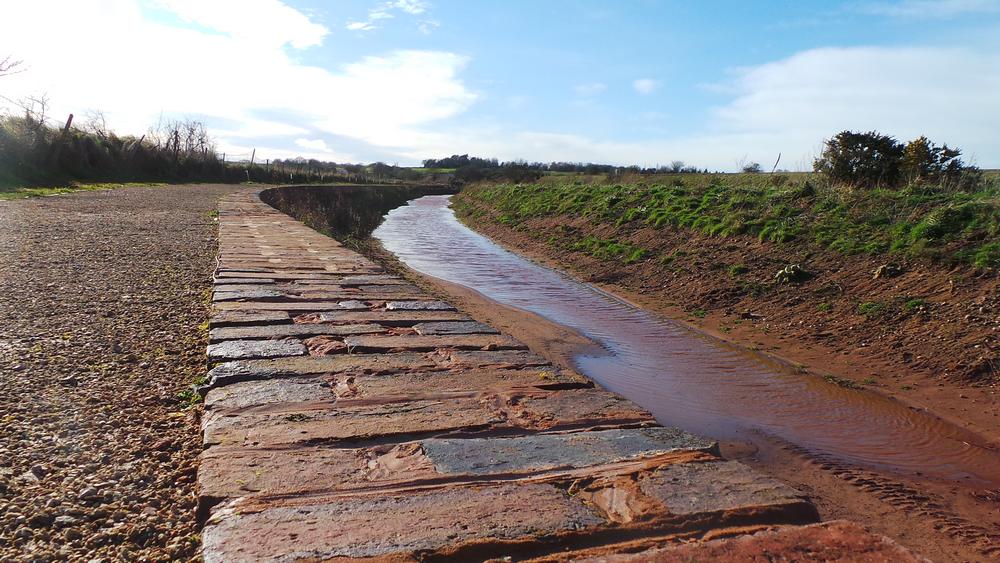
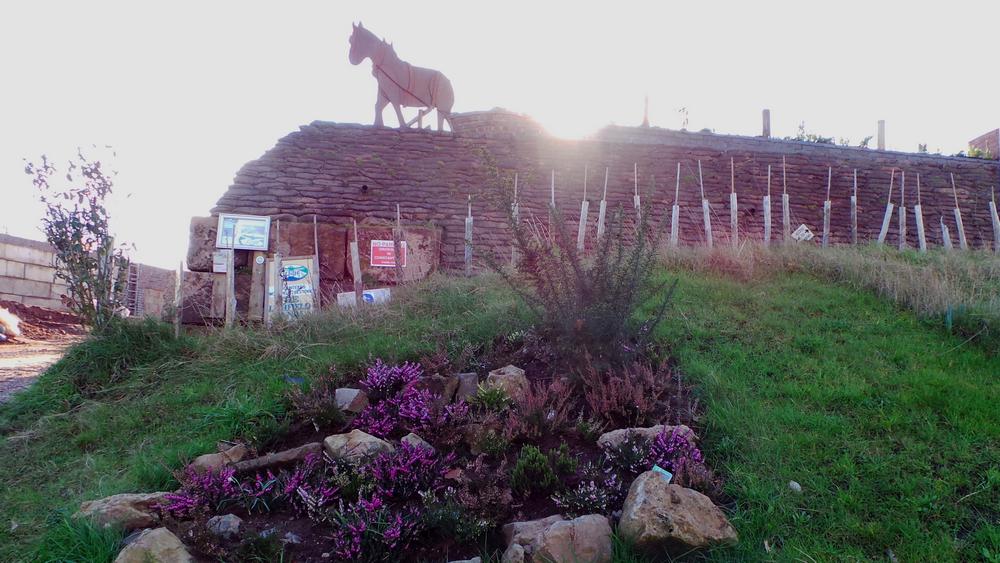
You will recall where the ‘Oss’ was originally sited? To the left of the site’s entrance? Well, we had to temporally move it to the other side, by the half sized narrow boat. This enabled us to start work on the Canal’s road side retaining wall. Just where this wall leaves the pound a very neat bit of brickwork by Rick t’ Brick, a nice double curve in brickwork and concrete blocks, gives that little bit more room for the extra-long narrow boat to exit/enter the pound.
We have now got to the stage where we can commence laying the concrete base of the canal. It has been agreed that we will concrete the whole length in a similar fashion to that done in pound 27 along Tamworth Road. We need to make this canal base a haulage route in and out of our ‘big pound’ as our existing entrance needs to be infilled and the path across the gap completed. As we progress with the concrete base so will we follow on with the building of the side walls on both side of the new cut. Concrete reinforcing mesh and rebar will make for a strong permanent structure for the future. To the road side a concrete block/concrete sandwich construction will be used. Together with a clay backing it will provide a strong water tight structure. To the field side, as we progress away from the big pound, we will revert to pilling with a clay backing as the towpath retaining wall.
To achieve all this, a huge amount of work, it will take time, and money for the materials. So please help, all donations gratefully received. Alternatively, you could come and give of your time. To those of you who would like to feed the ‘Oss,’ you can leave all the cakes and goodies in the staff’s cabin where no doubt the volunteers will find good use therefore.
Hugh Millington
Ground based photos: Christine Howles