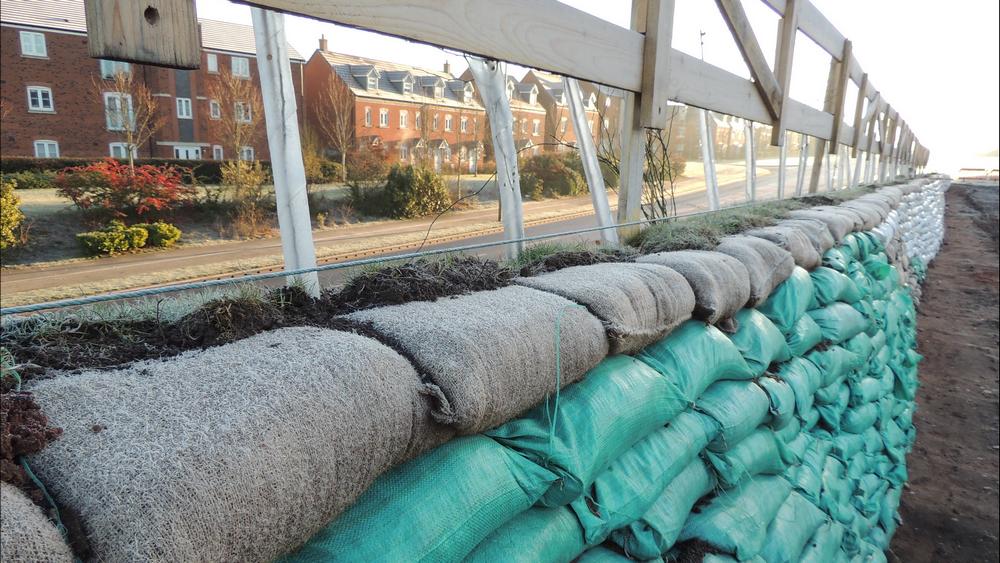
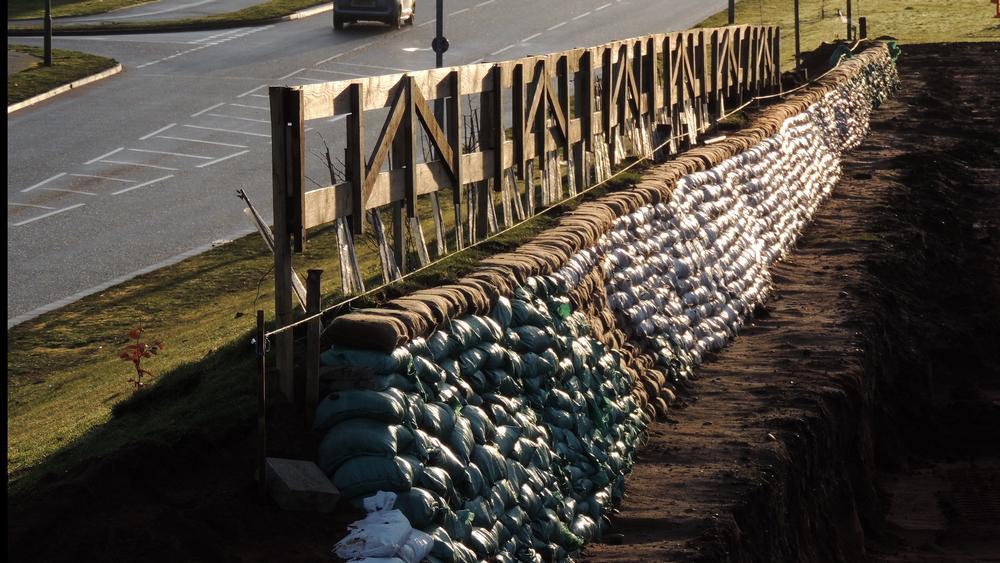
Down at our Fosseway site you may well have noticed that we are using a lot of sandbags as a method of constructing various banking requirements around the site. You will have seen that there are two types of bag, the plastic ones and the hessian ones.
The plastic bags are either green, white or black, colour being of no consequence and dependant on the offer price of the day they were purchased. The plastic bags are used where they will eventually be buried in some earth- works. Out of sight, where they cannot offend ones eyesight. They will be there forever as they are rot proof. Their use had been to provide a temporary solid earth-bank whilst other works around them progress. These plastic bags are filled with just sand, no surprise there. Tied at the end and laid in layers, gradually increasing the wall in height as you go.
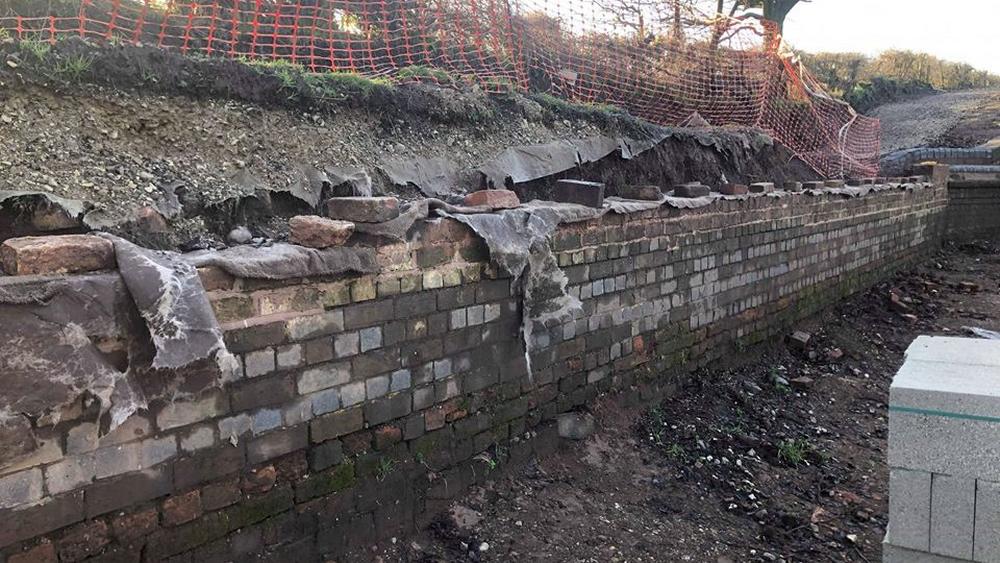
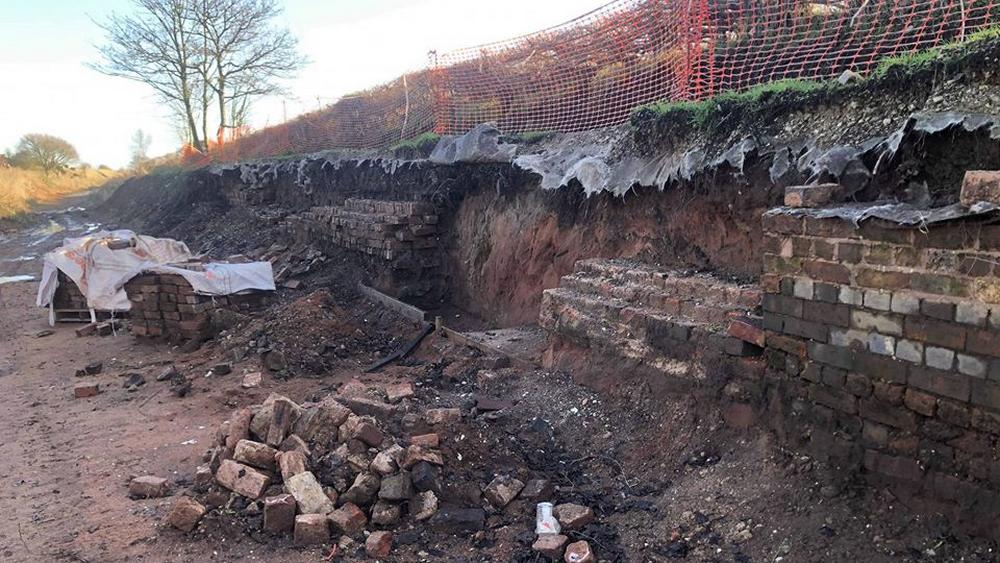
The hessian ones are slightly more expensive and are not as durable as the plastics. They rot after a few months from being exposed to the typical English weather. These too are used to build solid walls, walls that are likely to be on view to the public for years to come. They are filled two thirds full and tied at the end with string, as with the plastics. The hessian bags are filled with a mixture of sand and cement, a mixture ratio of 6:1 of sand to cement .
What is the purpose of using a sand/cement mix? Well as said before the hessian bags will rot eventually, if they are filled with this sand /cement mix, very soon after they have been filled and laid they will get wet with rain. This will activate the mixture and in no time they will become rock hard. Over a period of time the hessian rots away leaving seemingly a solid lump of rock on to which plant life can thrive.
The layers of bags need to be neat and horizontal and where possible the vertical joint should be staggered. However over a short period of time the hessian will have rotted away and plant growth will have taken over and the joint between adjoining bags will become indistinct. Now look along the embankment facing the railway bank, there's lots of bags here. There's lots more facing Falklands Road near to the railway bridge. There must be about two to three thousand hessian bags between them here.
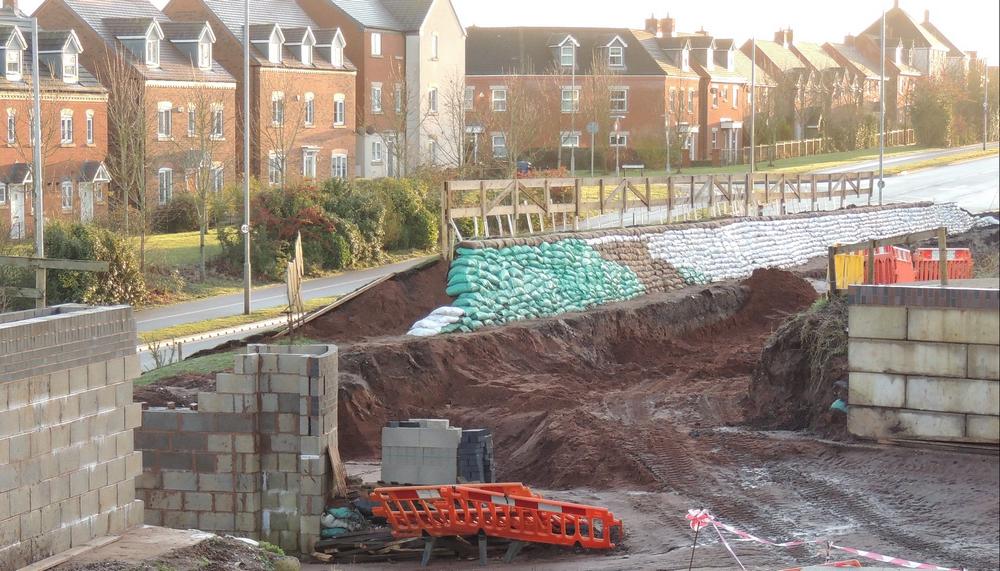
If you look along the current earthworks progressing parallel to Falklands Road you can see where sand bags are being used as a temporary support of the roadside bank as we increase the height of that bank to suit the canals' level. This is an example of the use of the plastic type bag. When the work is finished here you will not be able to see them at all.
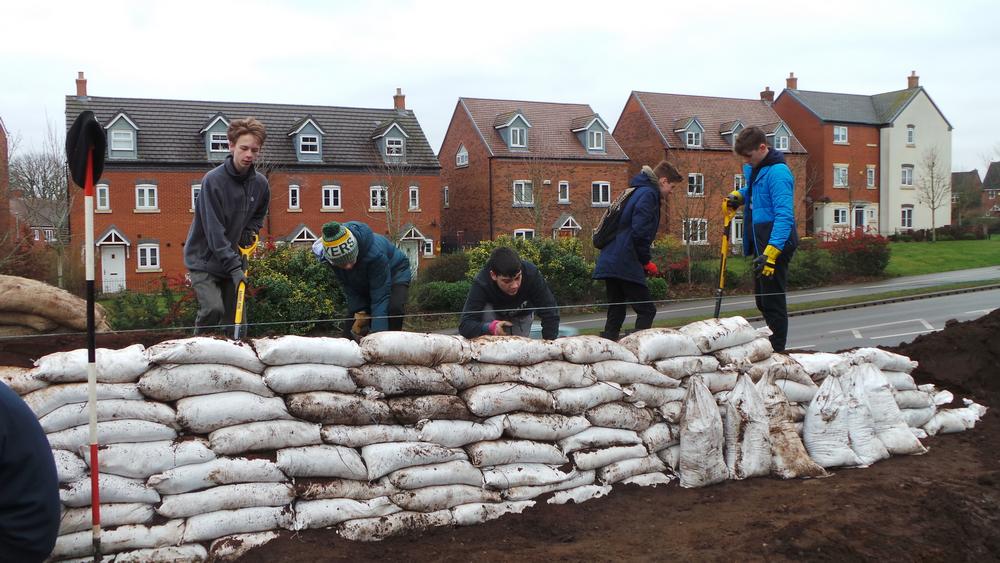
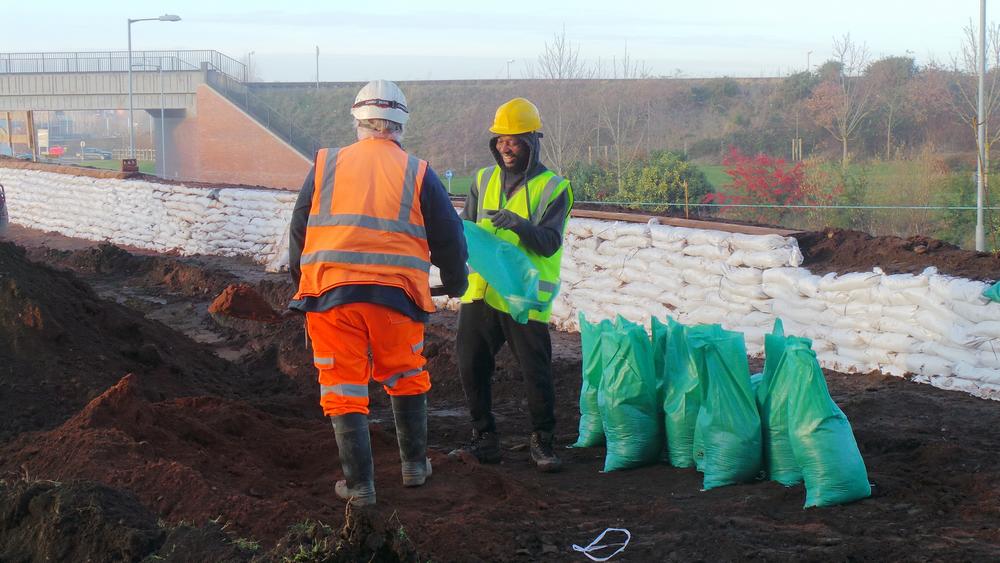
Filling sand bags may seem an endless task, a task that is best done with a team of three people. One to hold the mouth of the bag open, two to shovel sand or sand cement mix into the bag till it is two thirds full and three to secure the end of the bag to stop it all falling out again. Filling the bag to two thirds full is important. Too little mix and you are wasting bags, too much and the bags will not nestle into each other when laid and make it difficult to maintain a decent appearance to the finished wall.
Sand bags are best laid in horizontal layers if you want them to look neat. When laid they should be compacted by whacking them with the back of a spade, it firms them up so the next layer has something solid to sit on. And finally, if the wall you are building is not verticle then after each layer has been laid it is neccessary to back fill behind the newly laid bags with soil or sand to support the next layer of bags.
I Hope you understood this tutorial on sandbags and found it interesting!
Hugh Millington
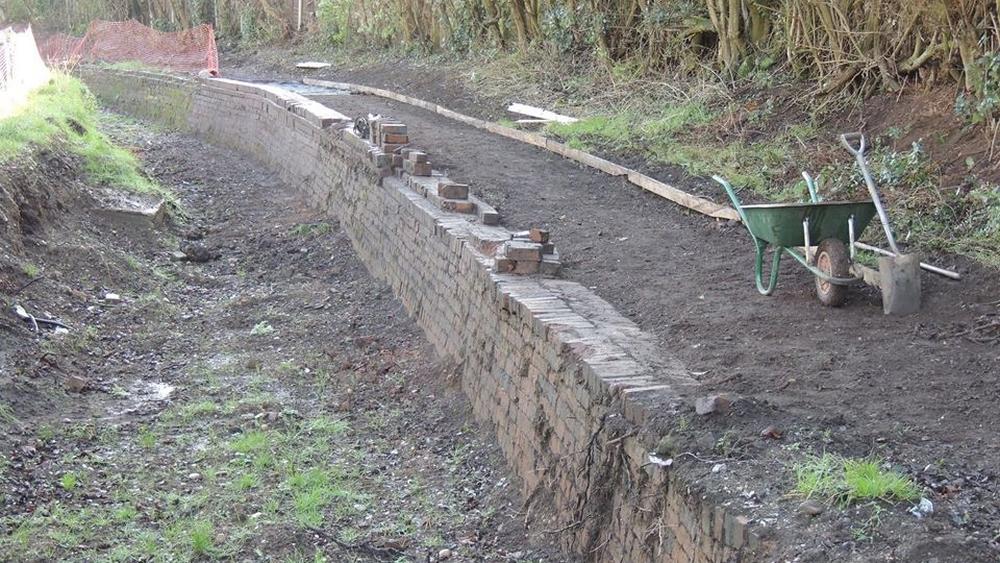
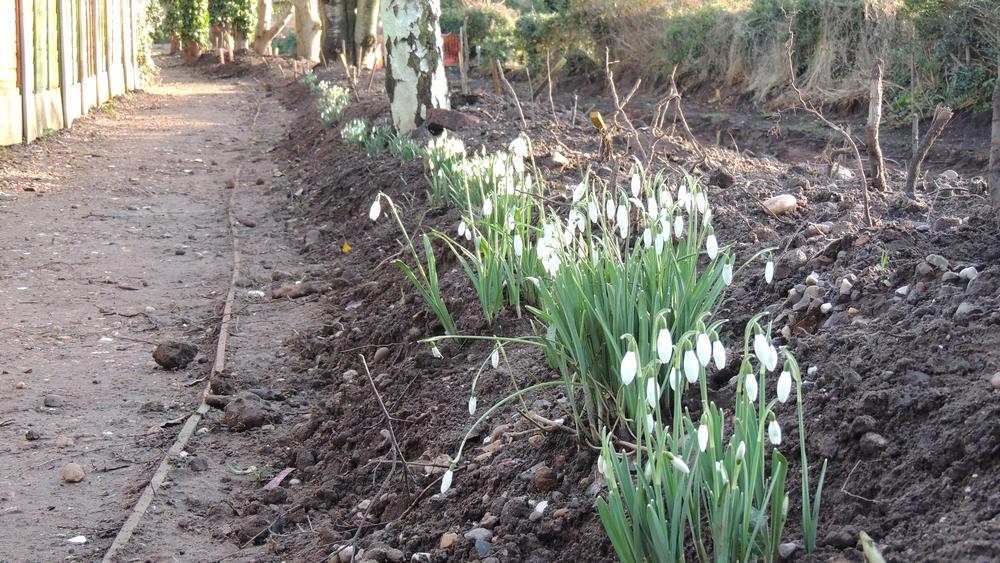
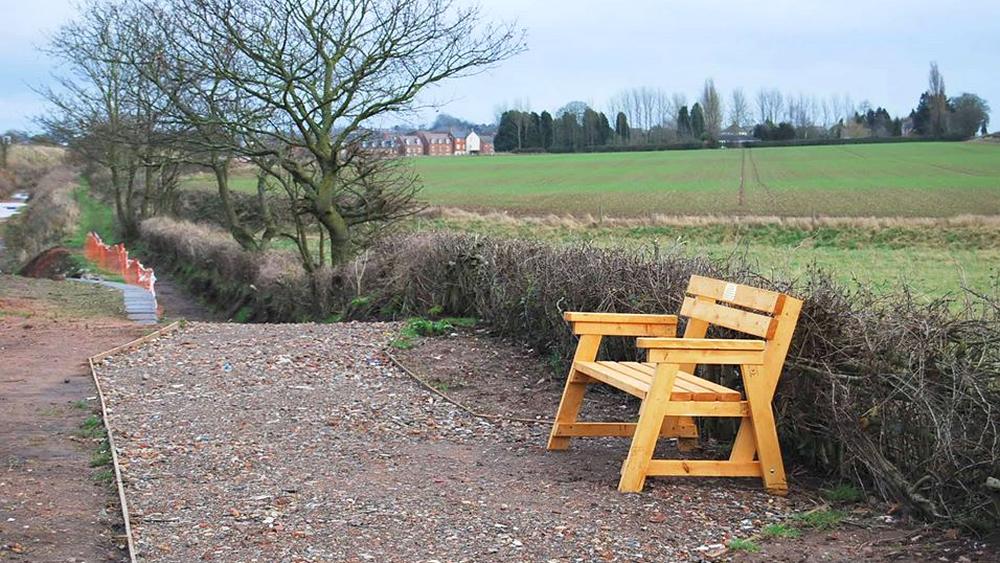
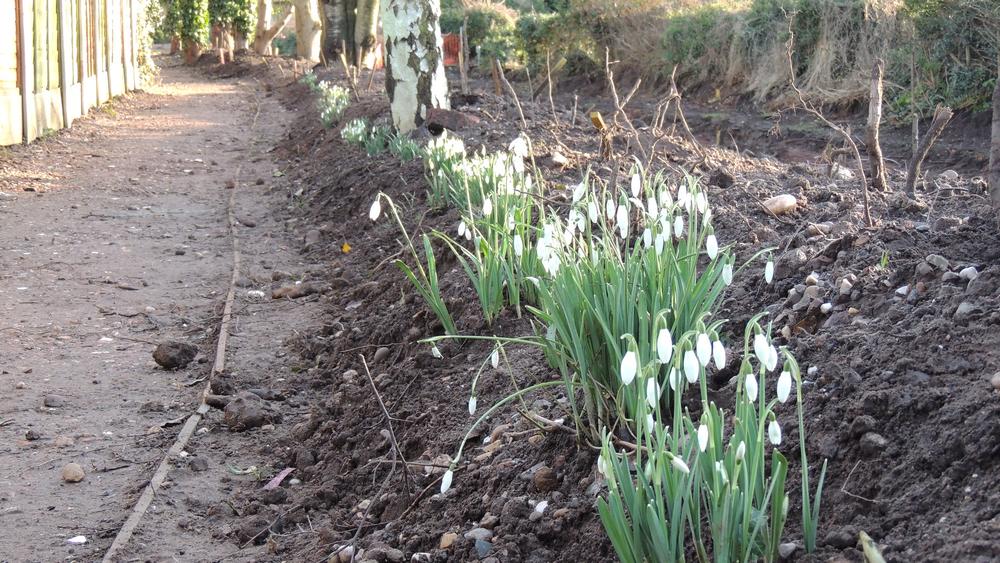
The Gallows Reach Nature Trail, which was opened last year, is a picture
with the snowdrops now in bloom.
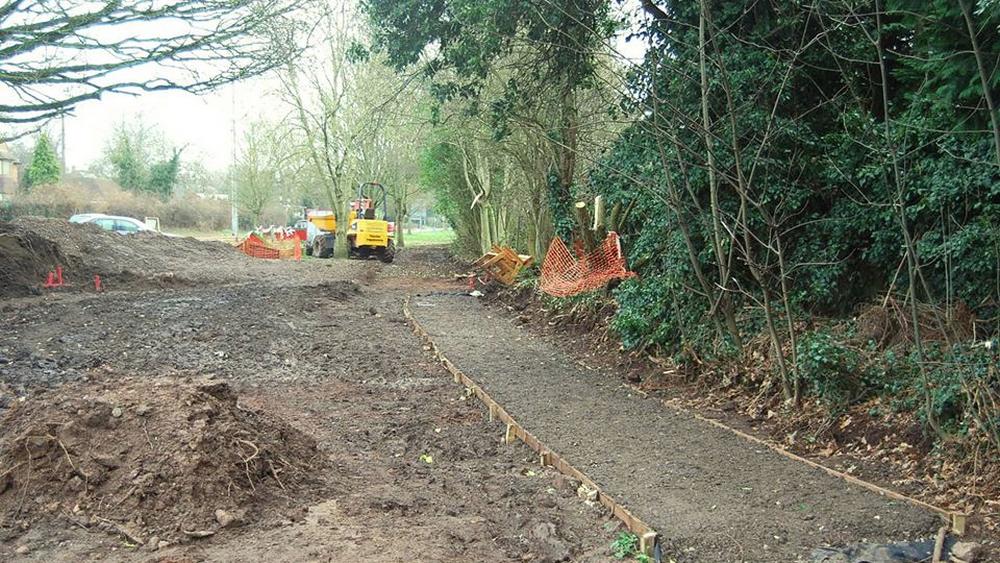
All the work to construct the stone path for the Nature Trail, creating the
environmental mound and planting has been carried out by our own
volunteers with the support of visiting volunteer groups.
The Nature Trail is now well used by the local community, including many
dog walkers, who appreciate a walk through the trees along the Lichfield
Canal. It also provides a safe walkway to observe the ongoing restoration of
the Heritage Towpath Trail and Lichfield Canal.
Gallows Reach on the Lichfield Canal is located between London Road canal
bridge to the rear of the Shell Garage and the Fish Face chip shop on
Tamworth Road.
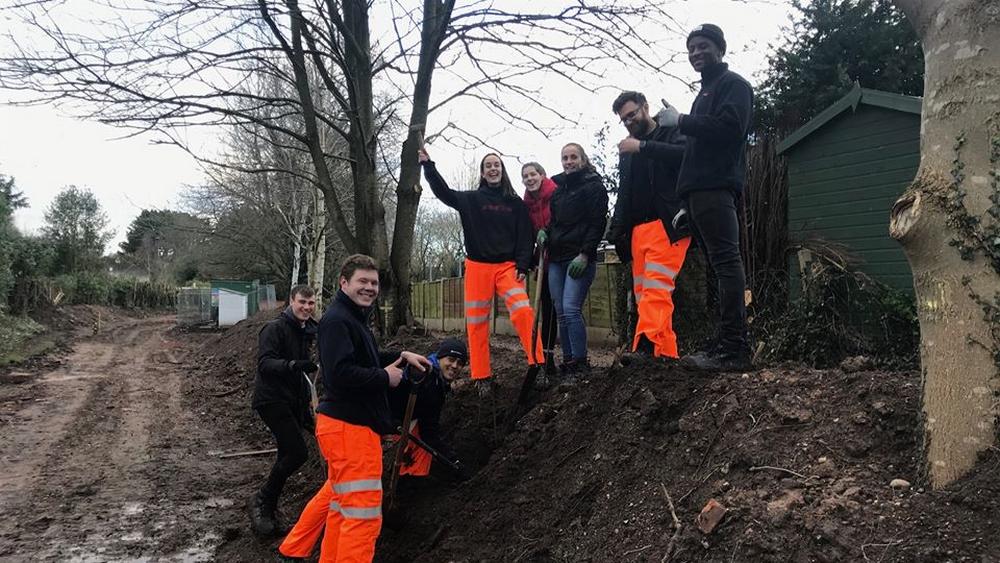
We were very pleased to welcome eighteen enthusiastic graduates and
students from Network Rail on 9th January.
With earlier preparation by the Trust volunteers of the very wet and muddy
canal area near the chip shop car park at Gallows Reach, we were ready for
the group to start work.
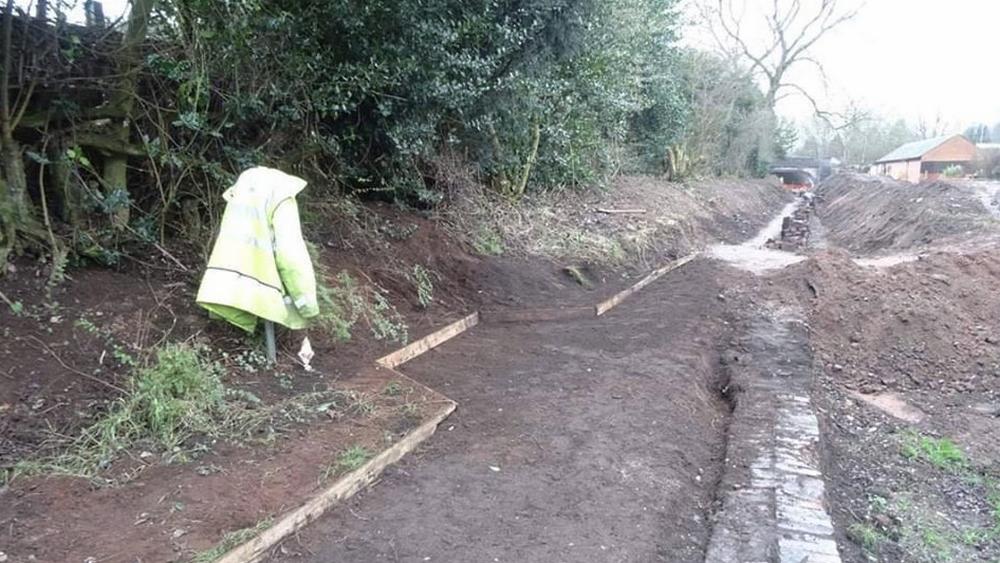
On arrival, the corporate volunteers split into several groups and set about
creating a new section of the stone Heritage Towpath Trail through the
wettest section, whilst another team went searching for a lost manhole and a
small team pulled out the laser level to establish some new setting out
control along the line of the canal.
The weather was good to us and a great deal was achieved in the day with
over 25 metres of new Towpath Trail completed in the day through the wettest
section. And yes, the lost manhole was located and exposed which allows
us to move the design forward for this section of canal.
The Network Rail volunteers worked hard through the day, refreshed with food
and drink from the Fish Face chippie. We thank all the volunteers who put so much into making the day a success
and in particular the Network Rail volunteers and we look forward to their
return soon to the Lichfield Canal.
Peter Buck