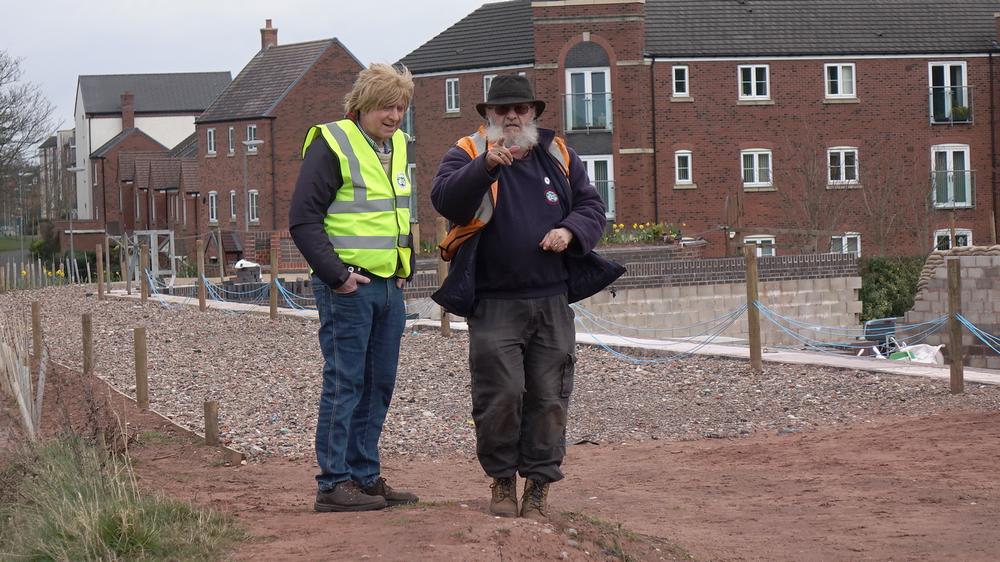
Lichfield Canal Trust director Peter Buck has given a presentation to a group of MPs about the benefits of canal restoration as a catalyst for regeneration and economic recovery from the effects of the coronavirus lockdown.
The Lichfield and Hatherton Canals Restoration Trust engineering director told a video meeting of the All-Party Parliamentary Group for the Waterways about the Trust's aims and achievements.
There had been a notable rise in visitor numbers during lockdown with up to 60 family groups per hour over two sites at the peak. Lockdown regulations had limited volunteer action, but work parties had resumed in June with appropriate Covid-19 precautions. It was hoped that other groups, Queen's Croft special school pupils, Scouts, Duke of Edinburgh award students, construction and bricklaying students from local colleges, Waterway Recovery Group volunteers, and corporate volunteers would resume their activities over the coming months.
Peter outlined the social and economic benefits of canal restoration, including the not often acknowledged benefit of water management and in particular the uphill retention of storm water, preventing flooding downstream. Challenges facing the Trust included working closely with local authorities despite not having support in the form of council officers assisting in the restoration. "We would hope that we can develop the positive and more effective partnership moving forward as the project gains momentum and increased profile" said Peter.
The Trust was working closely with HS2 to ensure they provide and pay for the necessary canal diversion and replacement structures at Cappers Lane, and to ensure the detailed design for the proposed railway fully provides for the Lichfield Canal. Negotiations were taking place with housing developers to ensure the canal is fully integrated with the landscaping proposals and with the local authority to ensure that the key canal structures are properly funded by either S106 funding or the developer.
The Trust is also looking for Highways England to possibly provide a replacement crossing under the A38 which severed the route of the Lichfield Canal at Darnford in the 1960s. Peter called for the streamlining of the planning application process, which is becoming increasingly complex, and the Trust had found itself having to challenge developers with planning approval which had failed to take account of the safeguarded route.
A current issue was utility companies being given permits for installing utilities
but not consulting restoration trusts to avoid placing installations on safeguarded
routes, leading to costly diversions later. "We find the bureaucratic processes we have to work through create an
additional burden and cost for our hard fought charity funds" said Peter.
"What we need is focussed help from local authorities and other authorities
to find the funding, reduce the burden to the canal restoration movement and to
speed up the delivery of all the benefits of the restored waterways to the
community , the environment and the economy."
The All-Party Group, which is chaired by Lichfield MP Michael Fabricant, a Patron of LHCRT, also heard presentations from John Dodwell, chair of the Montgomery Canal Partnership, and Terry Cavender, executive officer of the Buckingham Canal Society.