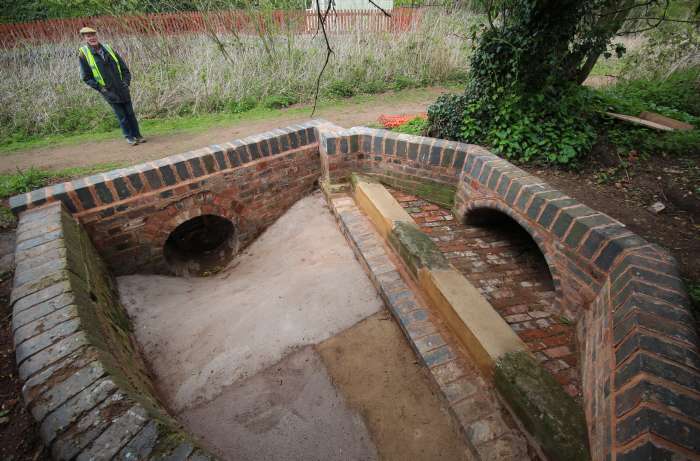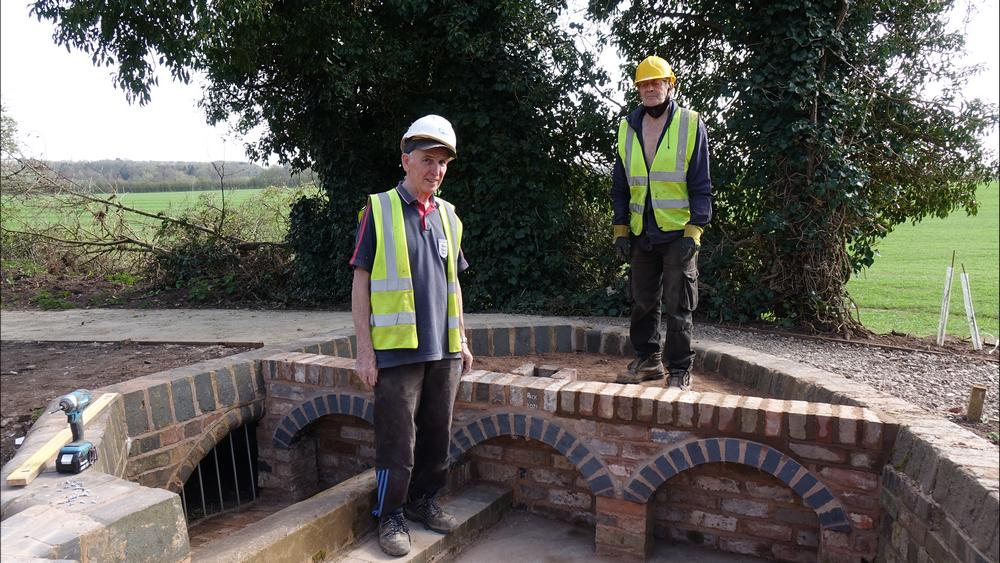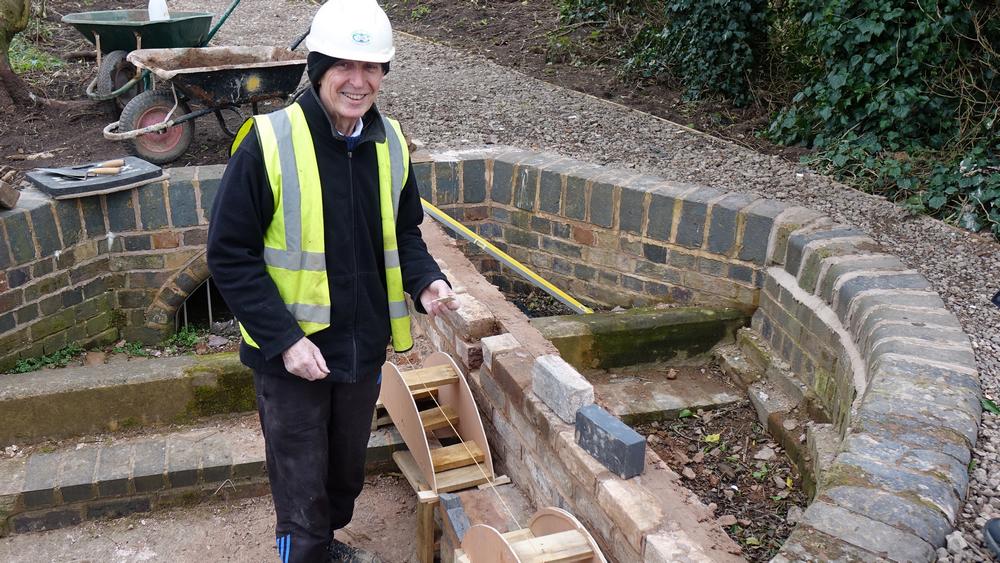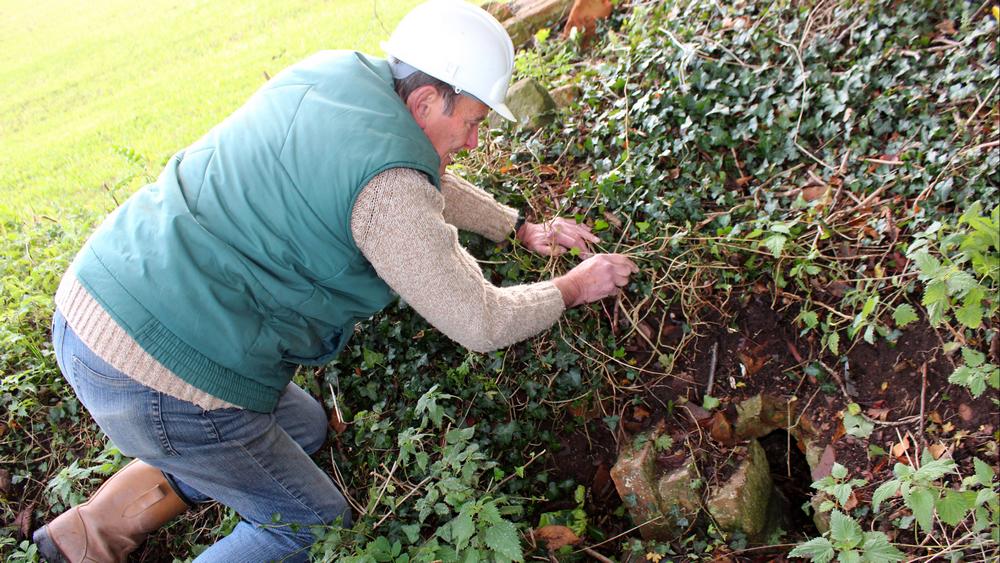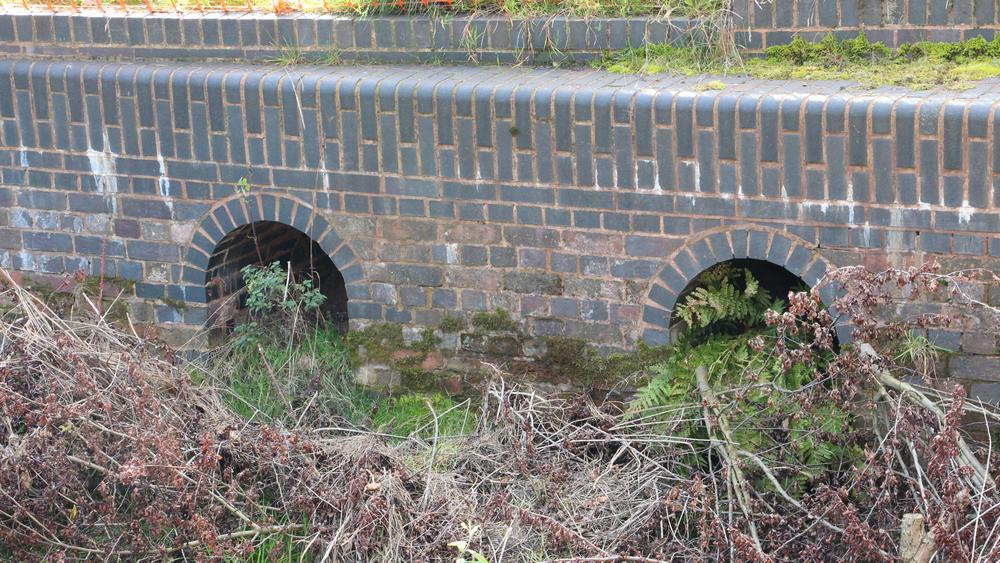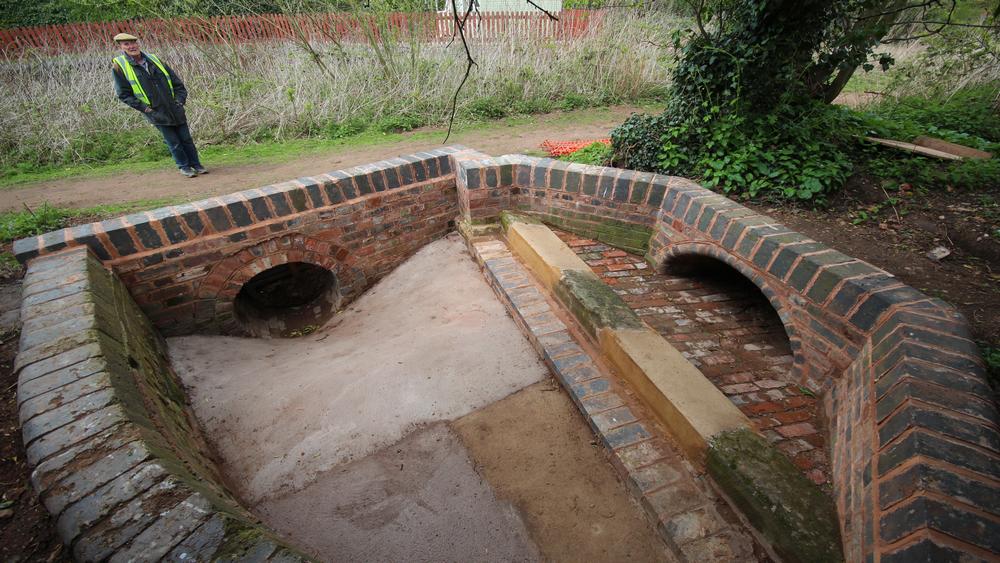
Uncovered in 2014 by Mike Battisson, the Lock 24 bywash had been restored as a typical example of a common canal feature although it is not needed for the final canal route. It was restored in 2016 by Rick Walters and Barry Parkes.
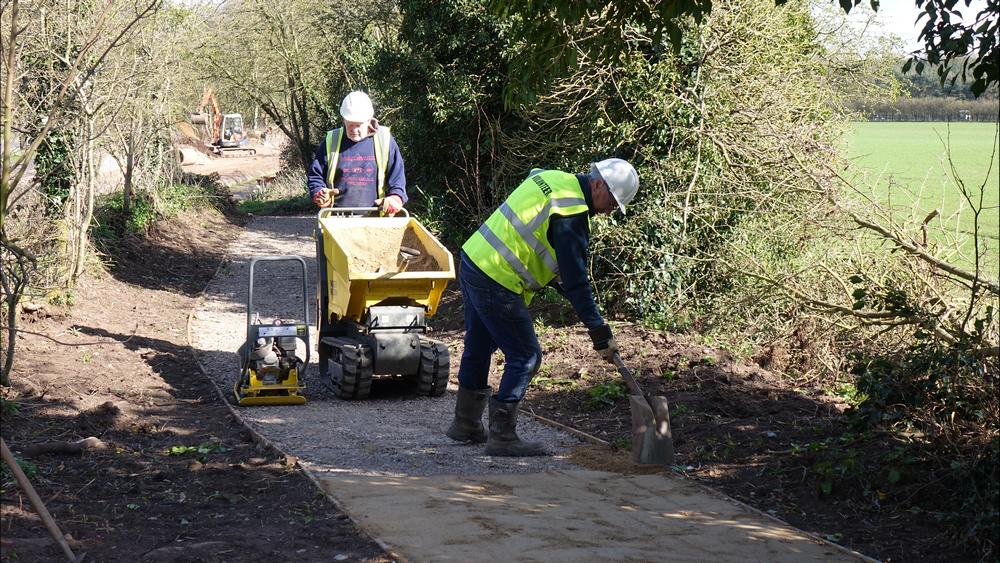
Lock 24 is not needed for the restored route. To avoid a hump back bridge, as it was originally, the restored canal will stay at a lower level to pass under Cricket Lane, with a new Lock 24 built on the other side of the lane. However the widening of the channel means the path has to be re-routed over the top of the bywash.
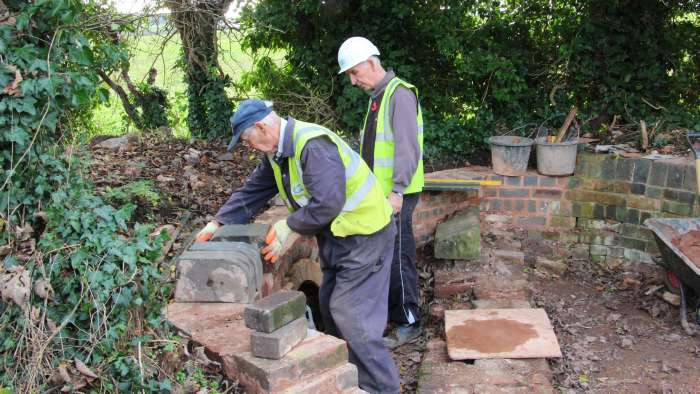
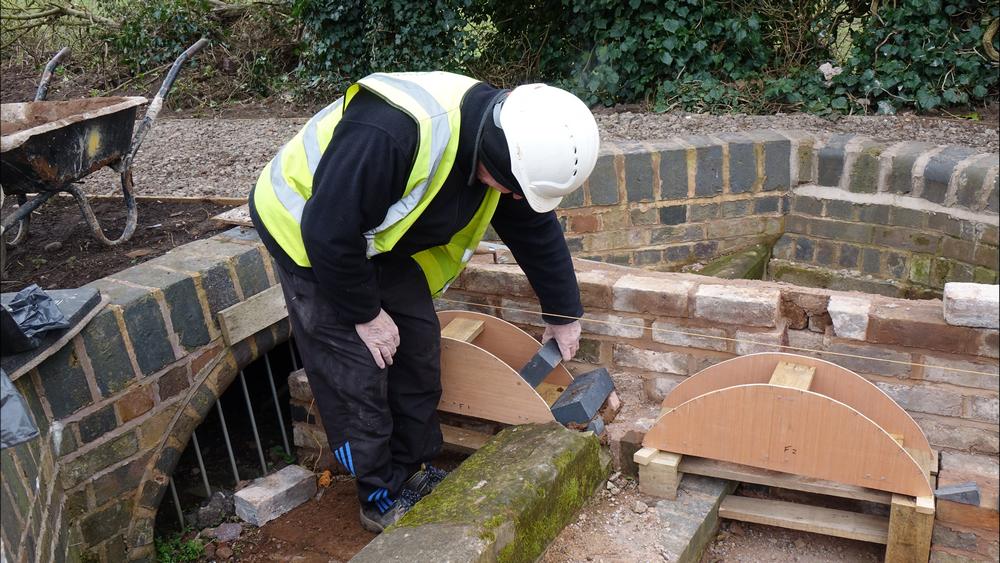
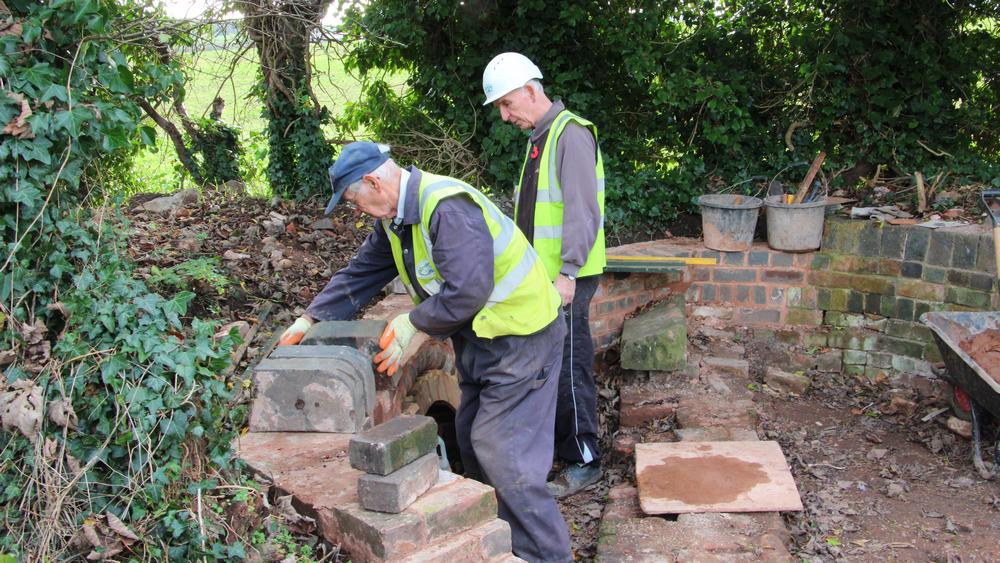
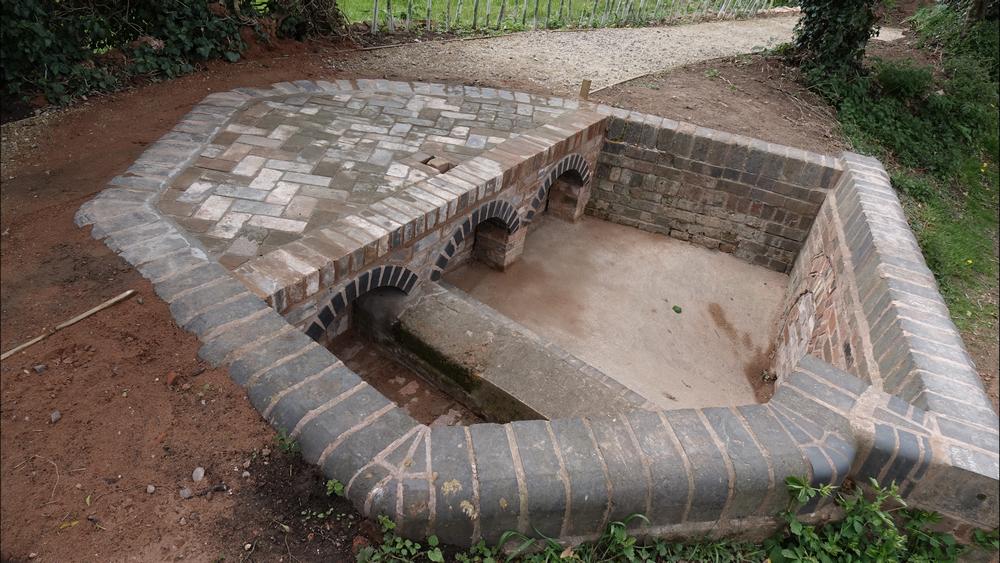
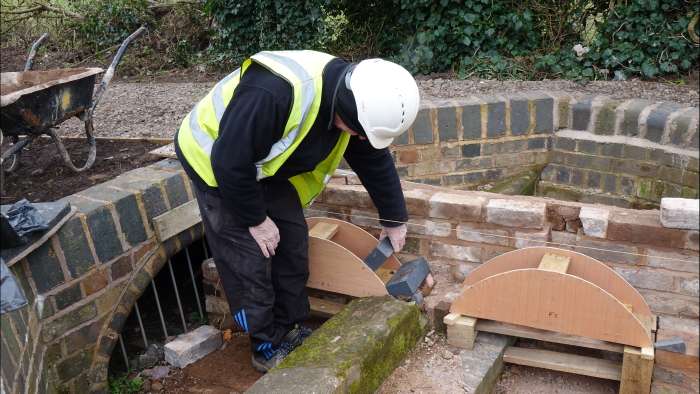
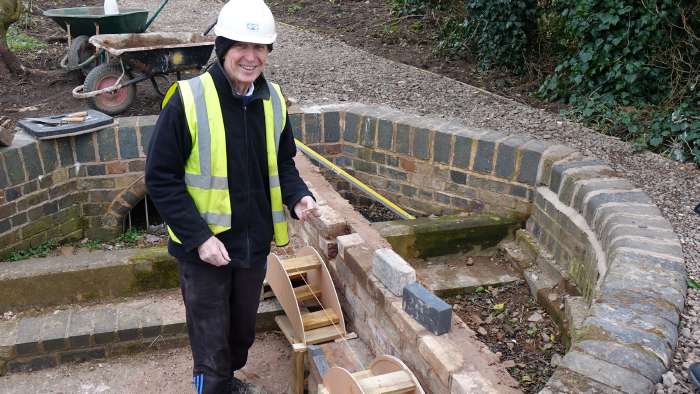
Instead of simply filling it in or using an RSJ to form a bridge Rick 'the brick' Walters has constructed brick arches as they may have done 200 years ago, and using mostly 200 year old bricks too. The bricks have been recovered from the dismantled lock wall and cleaned up for re-use. A lot of work is needed just to recycle the bricks, thanks to the Duke of Edinburgh Award students for doing much of it.
With the path laid and the herringbone pattern brick path now complete this is yet another example of the determination, vision and attention to detail of our volunteers.
A bywash forms an overflow by diverting surplus water over a weir instead of
allowing it to flow over the lock gates. It then flows via a small tunnel into the lower
lock.
See Lock 24 bywash and also the unusual Lock 25 circular bywash in the Heritage Towpath Trail



In October 2014 Mike Battisson wrote:
"Since first walking the Tamworth Road
section of the Heritage Towpath Trail I have been intrigued by the Lock 24
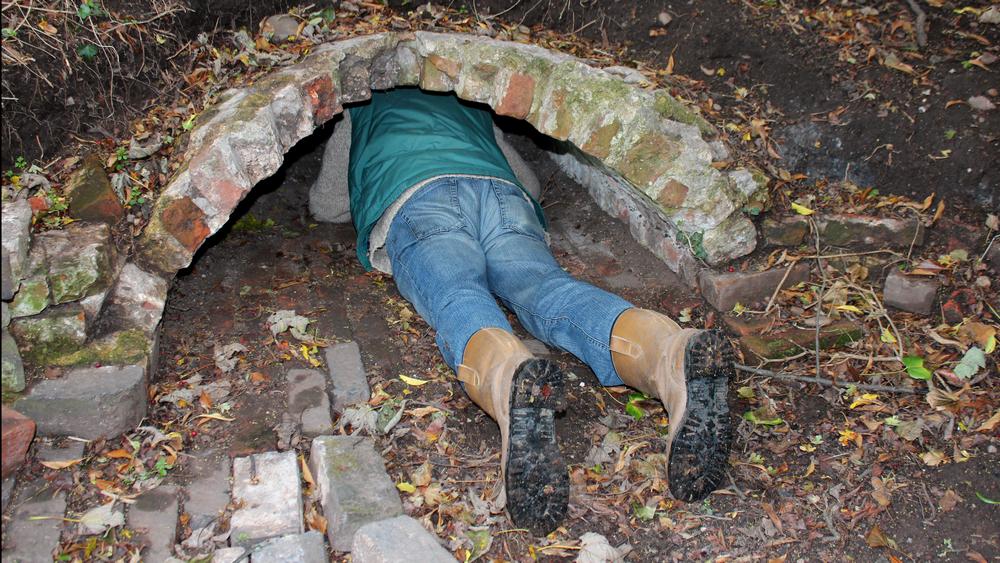
bywash entry feature with the extant 'tunnel' to the lower level, hiding demurely
behind its 4 foot screen of nettles.
As I understand it, this was blocked by the
'authorities' many years ago to prevent any attempts by the foolhardy to try to
crawl through it, or local dogs to become trapped.Having braved the prickly
barrier I started to remove the centuries of mud, weeds and detritus to reveal a
beautifully blue-nosed capped perimeter wall, still with 80% in reasonable
condition; readily restorable as a feature of interest, even if possibly becoming
redundant.
However, as I penetrated deeper to expose the base I was puzzled by
what I found. In contrast with the precise laying of the wall bricks, each brick in the
base was 1/4 to 1/2 centimetre higher or lower than it's neighbour. I wonder If this
was to provide a 200 year old equivalent to a non-slip surface to prevent
accidental slips when being cleaned out.
Entry to the tunnel is prevented by a
blockage of tarmac-like material. Removal of the blockage will necessitate the
fabrication of a security grill to deter interference."
More on this in the Heritage Towpath Trail