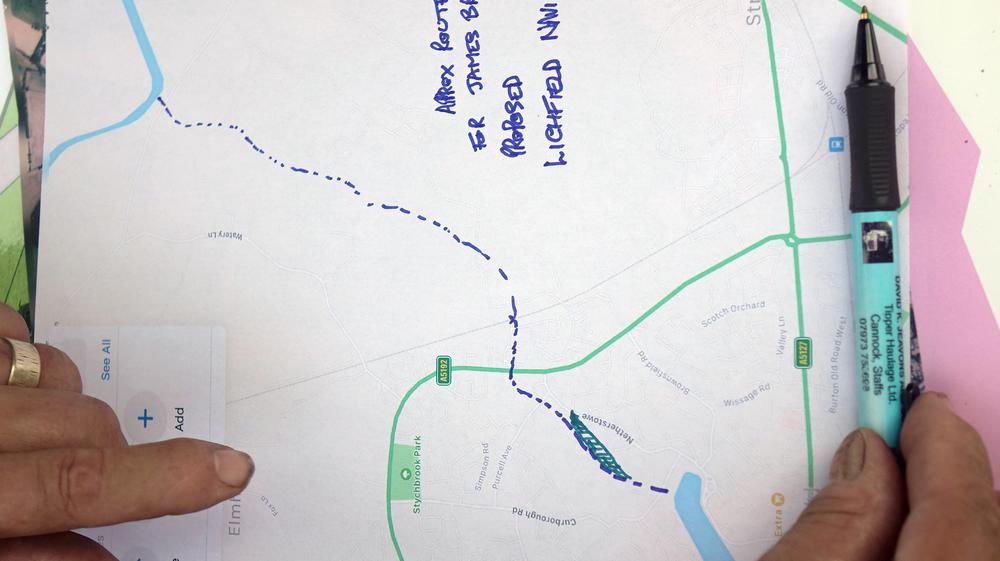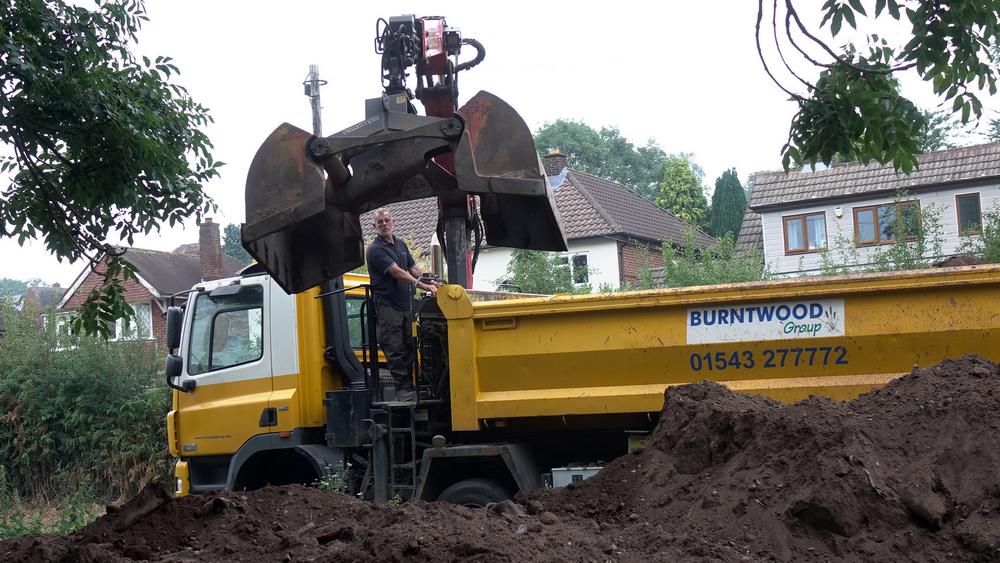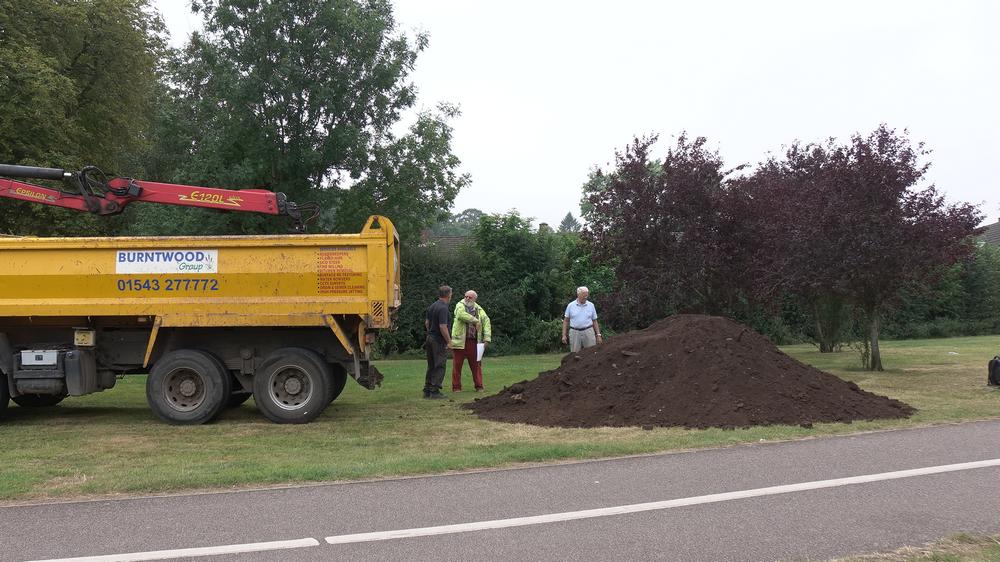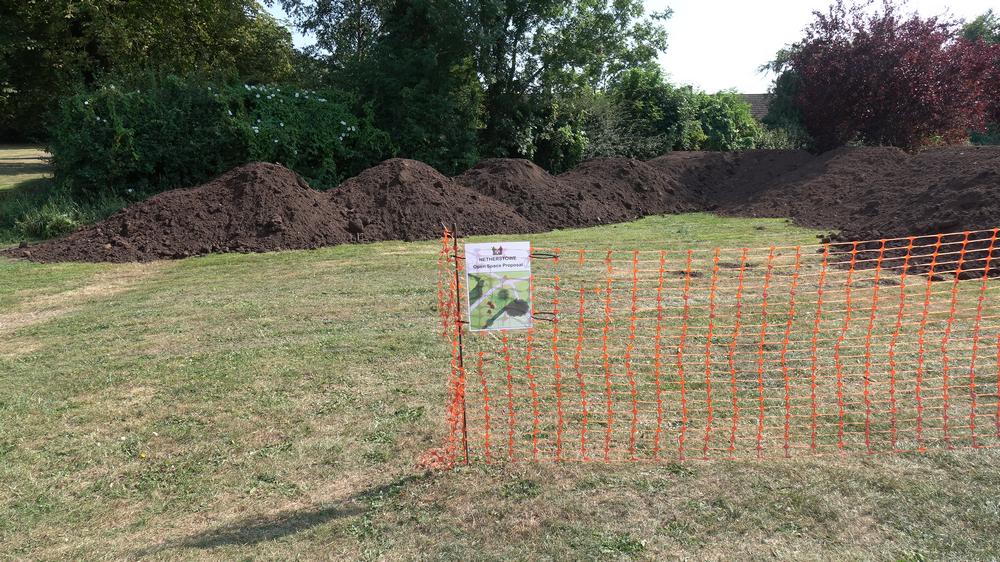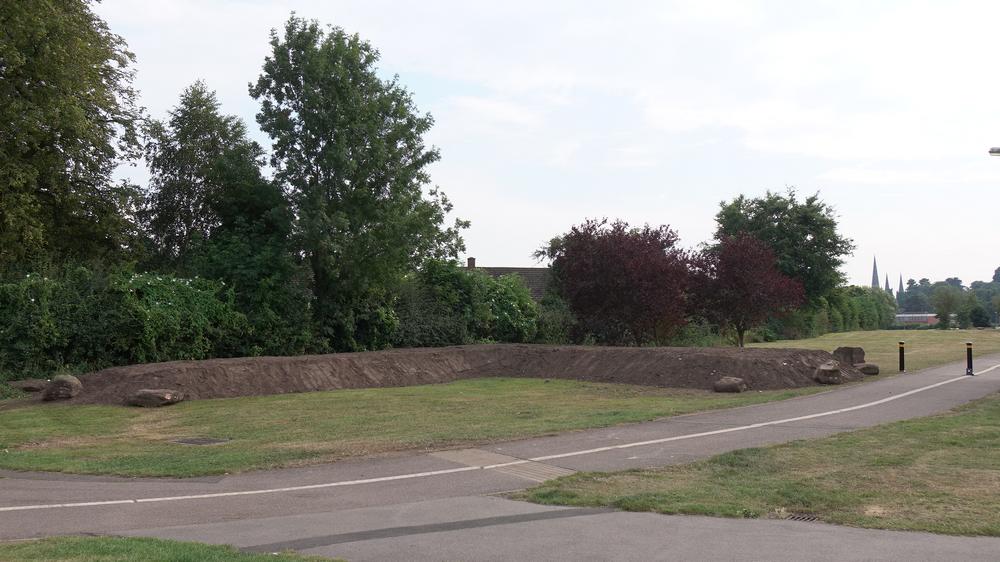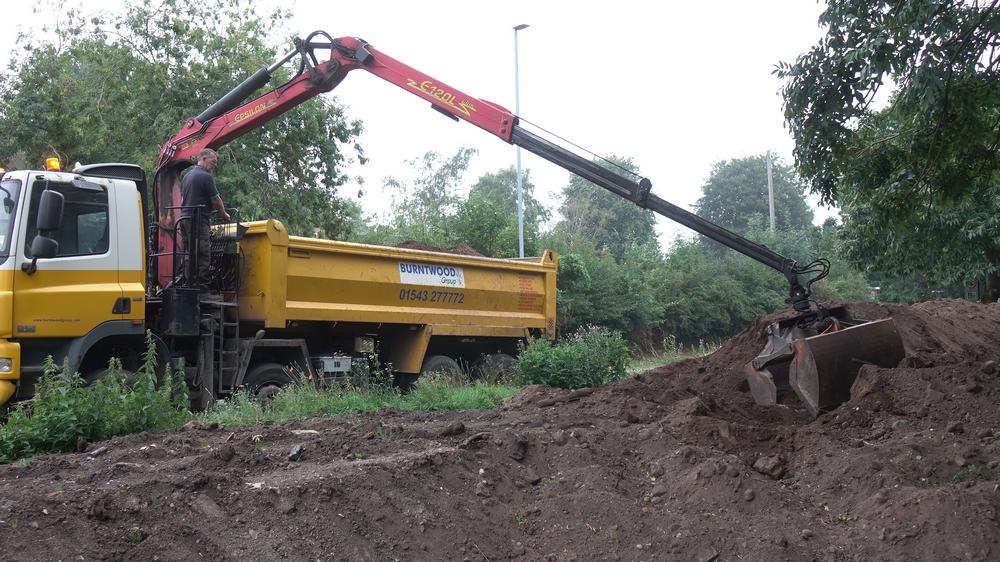
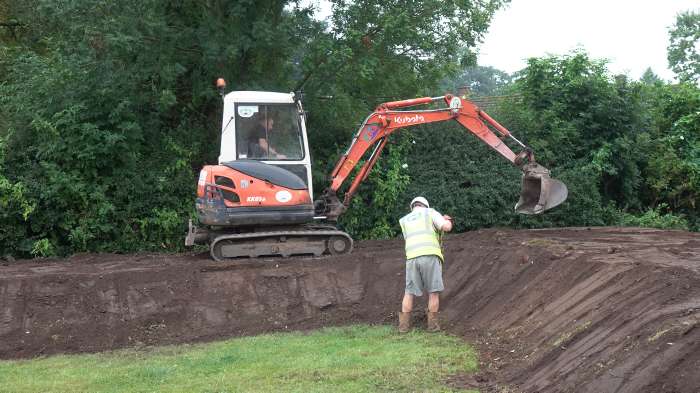
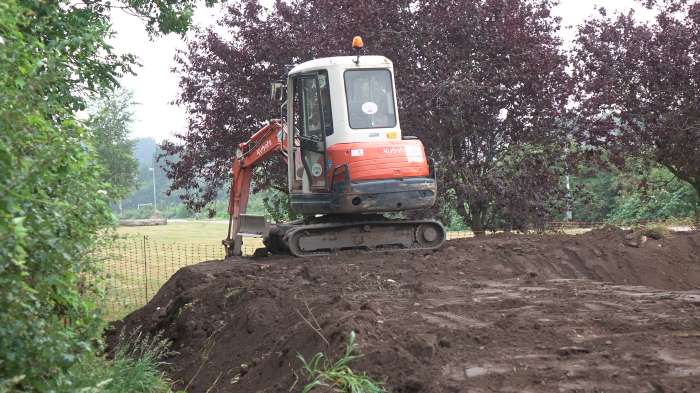
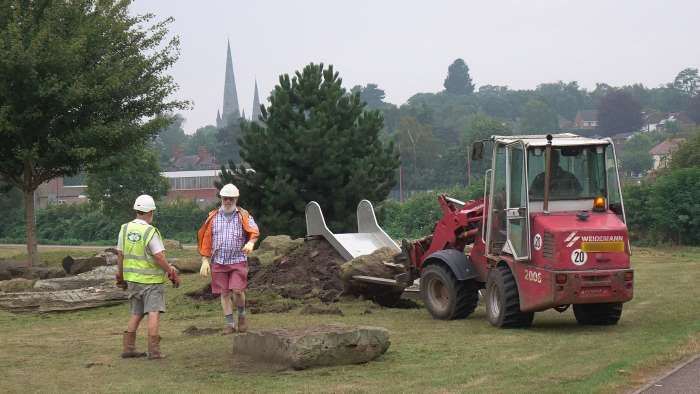
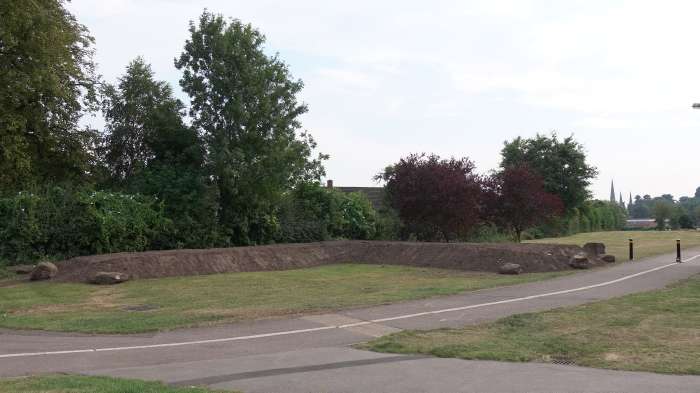
The Canal Trust has helped to protect an open space. Following the recent unauthorised Traveller encampment on City Council owned open space at Netherstowe, the City Council, in partnership with LHCRT utilised soil excavated from site of the former canal along Tamworth Road to create an earth ‘bund’ or mound along a portion of the grassed area adjacent to Handel Walk at Netherstowe, Lichfield. Approximately 150 tonnes of soil was transported to site on the 11th August. This was then moulded into the shape of the bund, which will be seeded with a wildflower mix to create an attractive gateway to the open space. The City Council will also plant a feature Oak tree to further enhance the site. The scheme was designed by local resident Katie Machin, a Landscape Architect at Sutton Coldfield based Pegasus Group. A number of bollards are also due to be installed, and together with the bund, it is hoped that they will provide considerable protection against any future unauthorised vehicular access to the land.
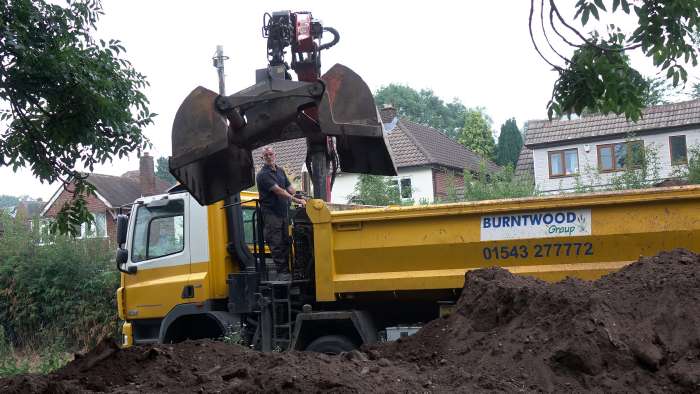
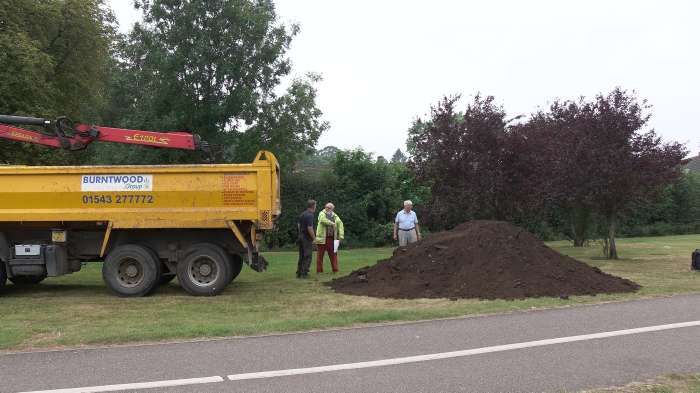
Peter Buck, Engineering Director of LHCRT said "This has been an interesting project that has come together very quickly in response to the concerns of local residents, the Trust is pleased to be able to assist with this project and it is good to see the soil that we have excavated to form the canal being put to such good use."
"Tuesday was a great day with the help from Steve of Burntwood Environmental and his grab truck, who self loaded and transported over 150 tonnes of soil. Thanks also to Nick Burton of Lichfield City Council and our newest volunteer Chris Weaving who spent the day supervising the operation and keeping the friendly locals clear of the site and fully informed of the works being undertaken."
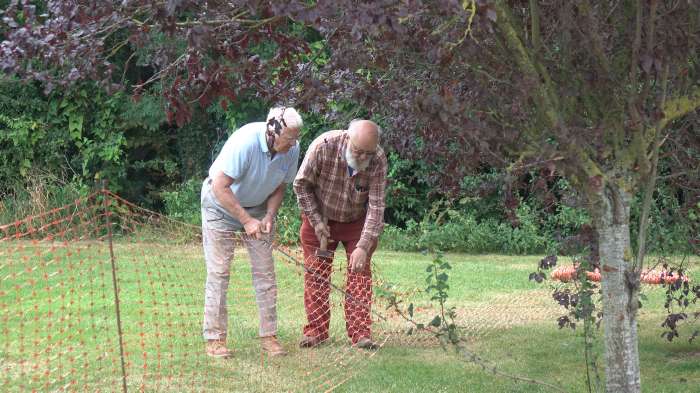
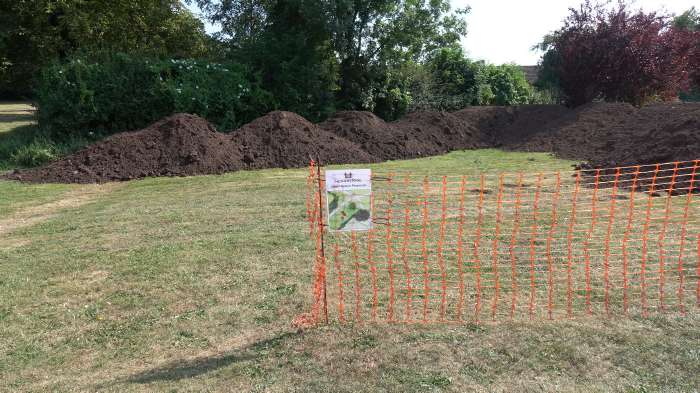
Thursday was the day the Trust Volunteers would finish
moulding and shaping the soil into a landscape mound across the entrance to
the Public open space.
The day started early with me hooking up my Land Rover to the Trust plant
trailer which Steve had loaded with our 3 tonne excavator which he had serviced
and filled with fuel and added all the spades, rakes, brushes and tools required
for the days work at Netherstowe
The drive with the loaded plant trailer to Netherstowe went without incident and
we drove onto the grass open area which was firm and dry underfoot ( or
underwheel?) with all the recent good weather.
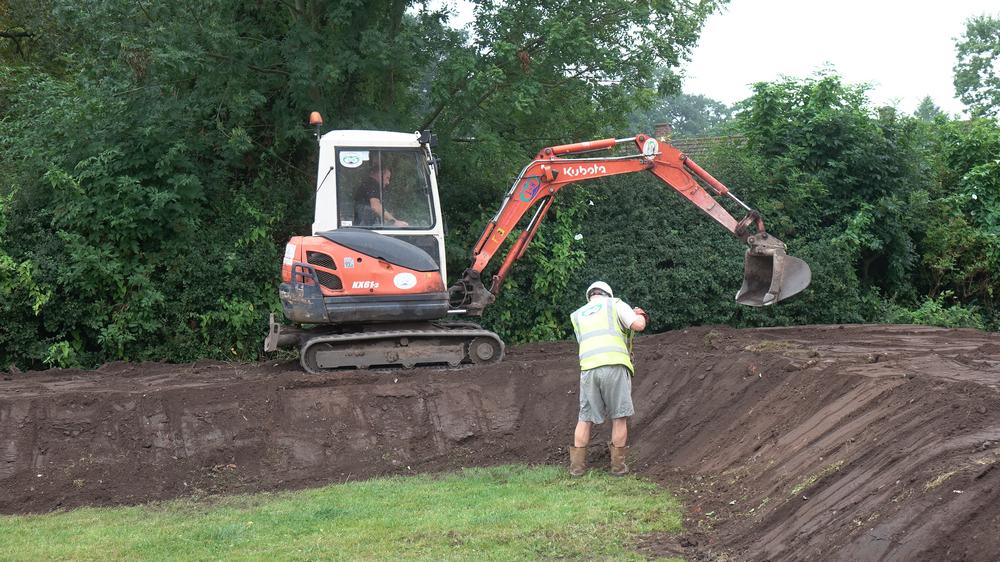
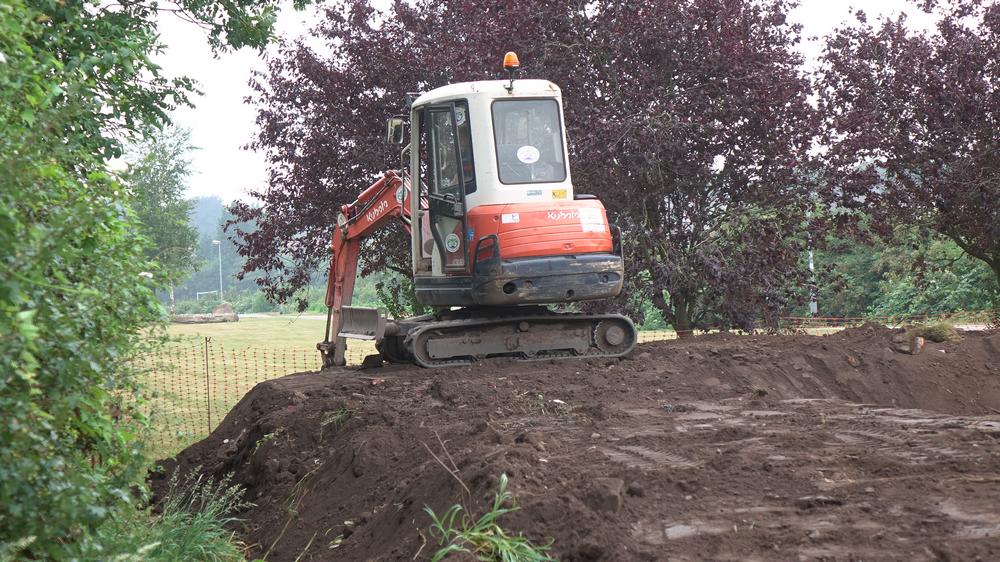
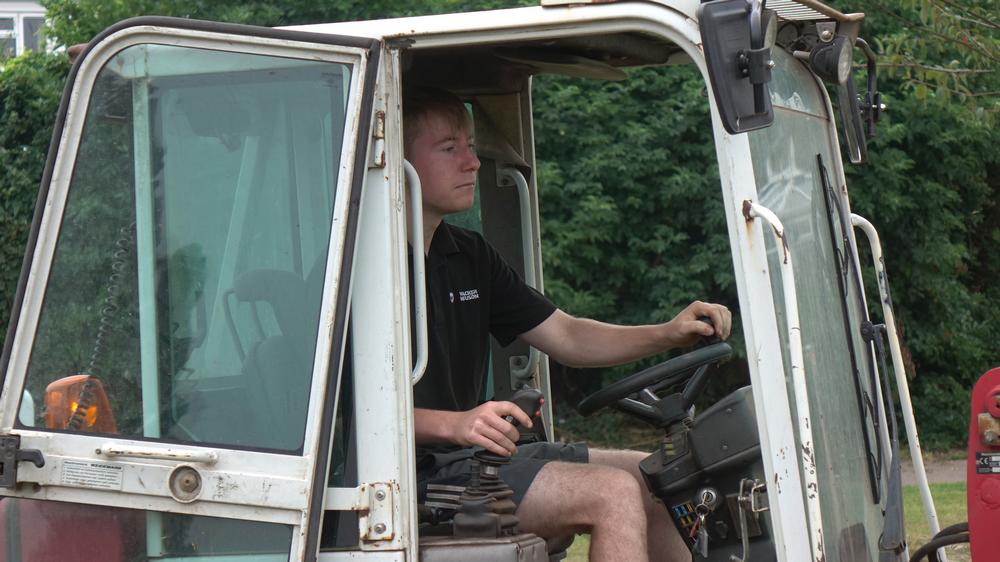
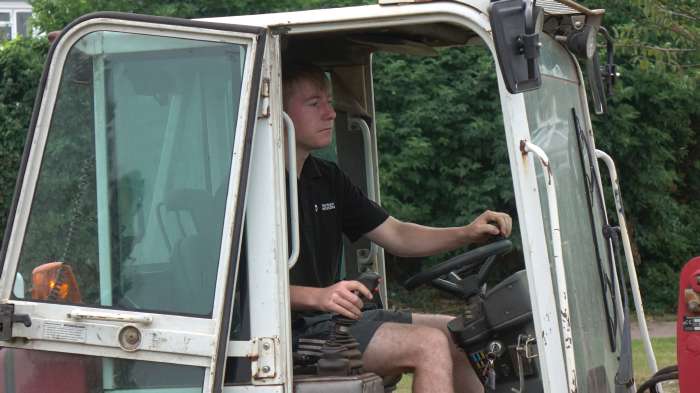
The 3 tonne excavator was soon off loaded and put to work by our Dex who had given
up a days paid work to volunteer and operate the excavator for the day. He was
soon joined by Paul who raked and finished the mound sides, in between
explaining to the passing locals what we were doing.
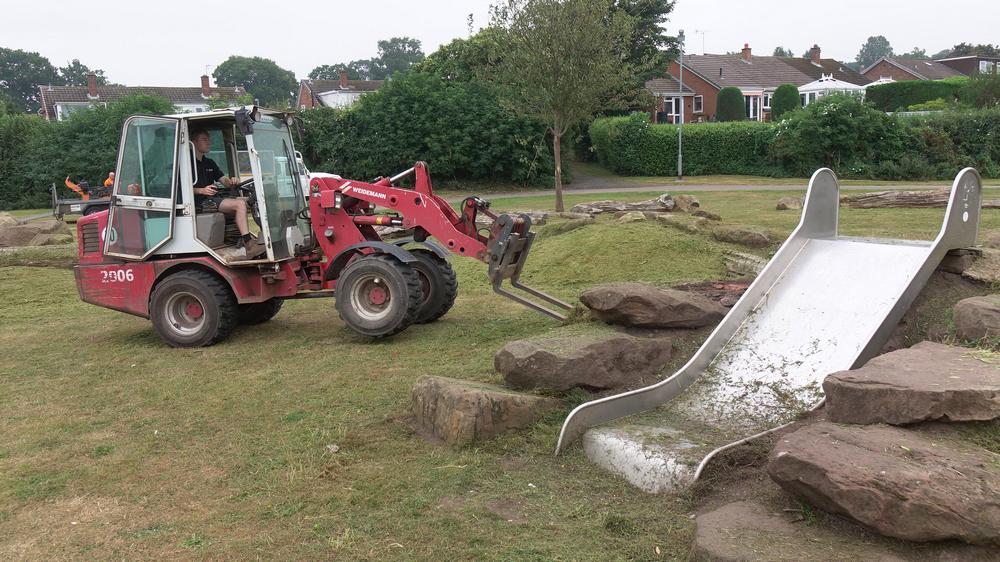
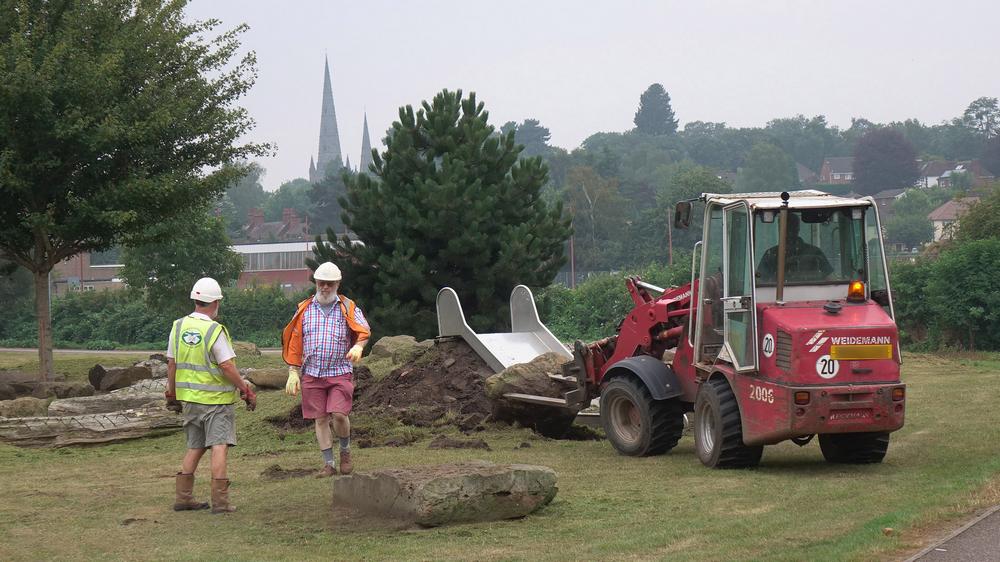
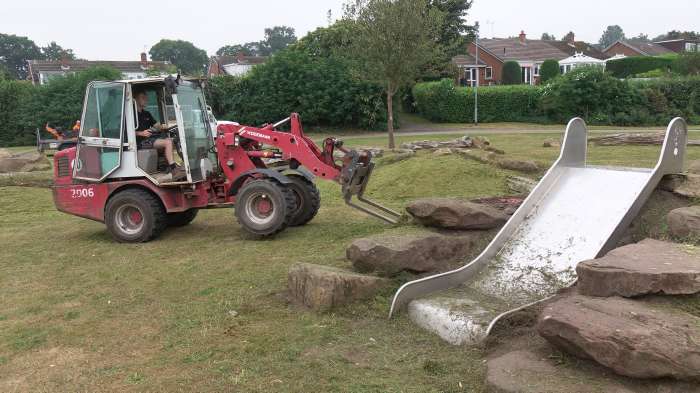
We were joined by Harry who had driven the Weiderman loader over from the
canal to enable some large rocks to be lifted from the slide /play area and
these were placed around the landscape mound. We had been asked to
remove the pile of rocks from one side of the slide and Harry soon lifted out
the rocks, carried them out to the new bund area and placed them into
position. Harry swiftly changed his forks for a bucket and carried some soil
to the play area to make good where the rocks had been removed. Dex
tracked the excavator down to the play area and with Paul they graded,
raked and made good the slopes against the slide ready for seeding by the
LCC team
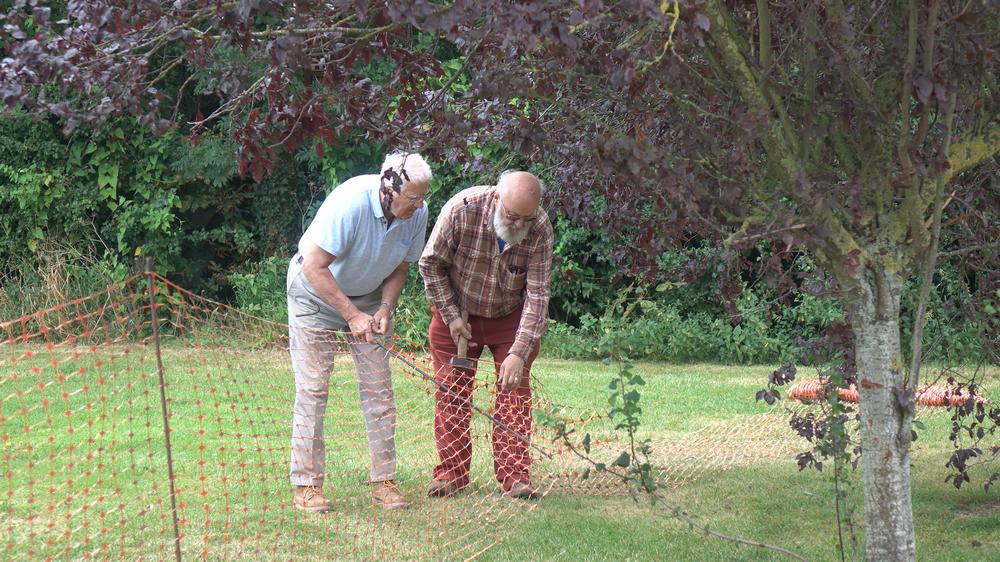
With all Trust works complete at Netherstowe, the paths all swept, the
fencing rolled back up and removed, the excavator was put back on the
Trailer to take back to the LIchfield Canal and assist the volunteers in the
restoration works and take on the next challenge.
Peter Buck
It left me with one thought. James Brindley back in 1759, proposed “a
Navigation Canal from Stowe Pool or Minster Pool in the City of Lichfield into
the River Trent near King’s Mill in the County of Derby” and this canal would
have passed right along the Curburough Brook along the line of Handel Walk
at Netherstowe where we had been working. Sadly this canal link into
Lichfield, part of the Brinkley’s Navigable Canal was never built as he was
unable to get the backing from the great and the good in Lichfield and he was
persuaded by the Duke of Bridgewater to build a canal for him up north. And
here we are in 2020, depositing soil from the later 1797 Wyrley and
Essington Canal round Lichfield, which we are restoring as the Lichfield
Canal. James Brindley must have walked this path many times in 1758/9
during the design of his Lichfield Navigation for him to produce drawings and
estimates, copies of which we have in our files.
Peter Buck
See more on Bridley's plan in 'A 21st Century Vision for the Lichfield Canal'